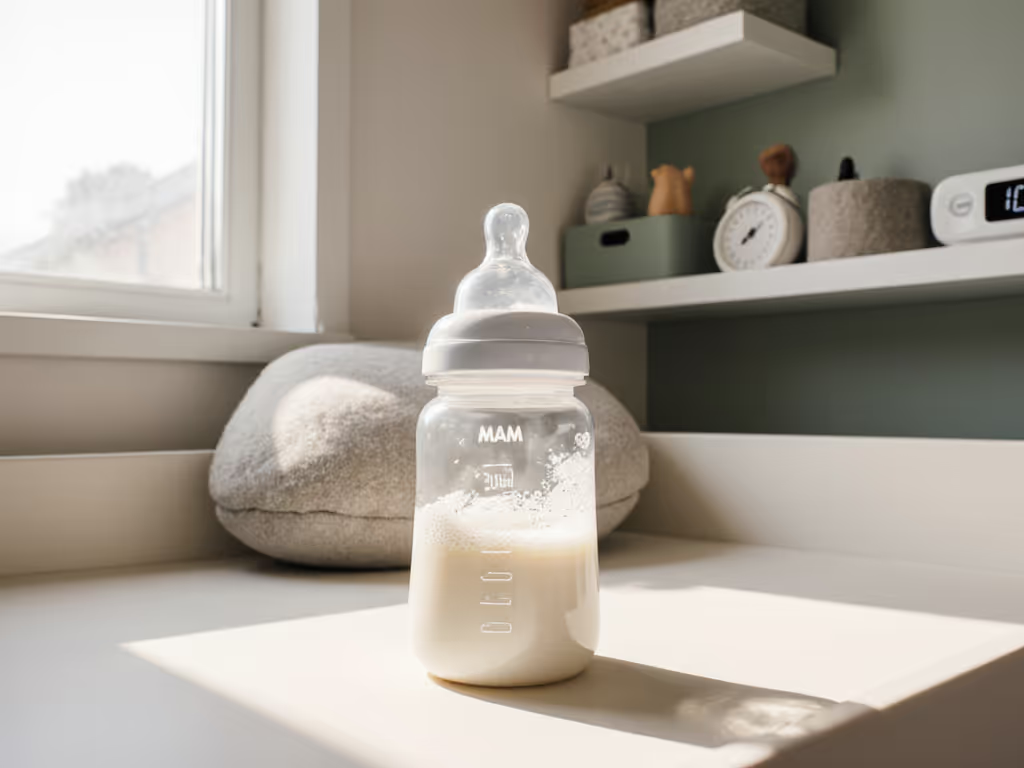

Nanobébé Flexy Review: Best Bottle for Breastfed Infants?
21st May•17 min read
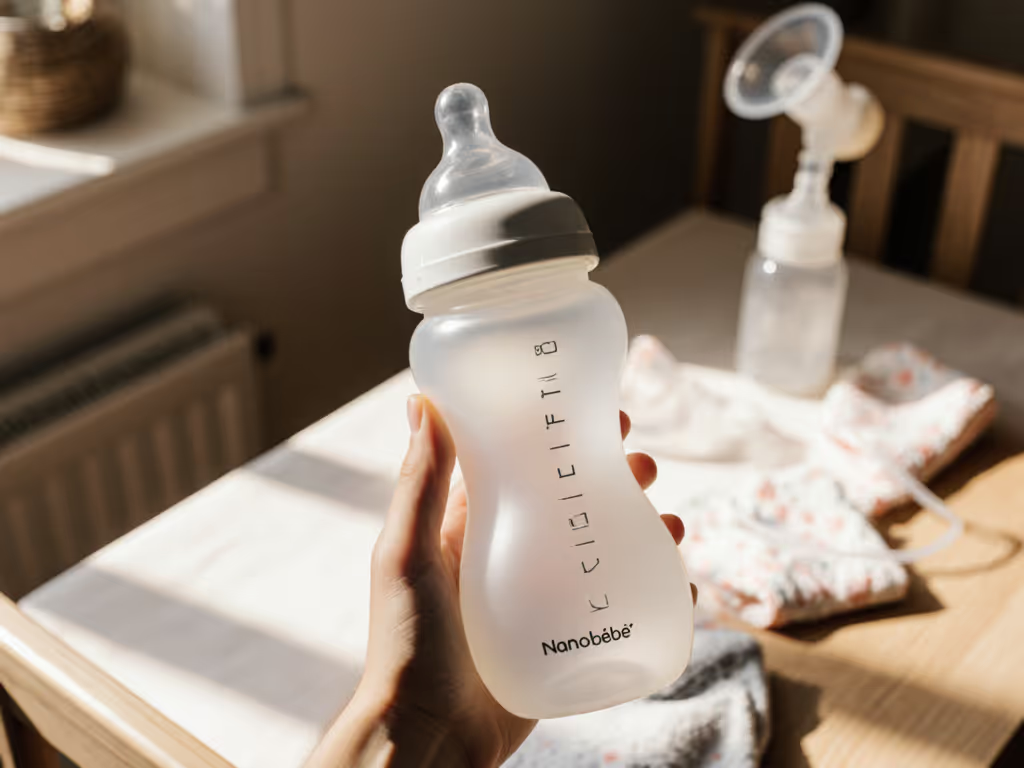
Nanobébé Flexy review findings rest on a simple principle: outcomes govern recommendations more reliably than marketing labels or tier classifications. Parents transitioning infants to bottle feeding (whether preparing for daycare, returning to work, or combining breast and bottle) need the best bottle for a breastfed infant that reduces unnecessary trial-and-error and measurable friction. The Nanobébé Flexy positions itself as a breastmilk simulation technology solution, built on soft silicone and vented nipple architecture. But does the lab evidence align with real-world caregiver logs and infant feeding outcomes? For context on how silicone stacks up against traditional materials in daily use, see our silicone vs traditional leak and feeding performance comparison.
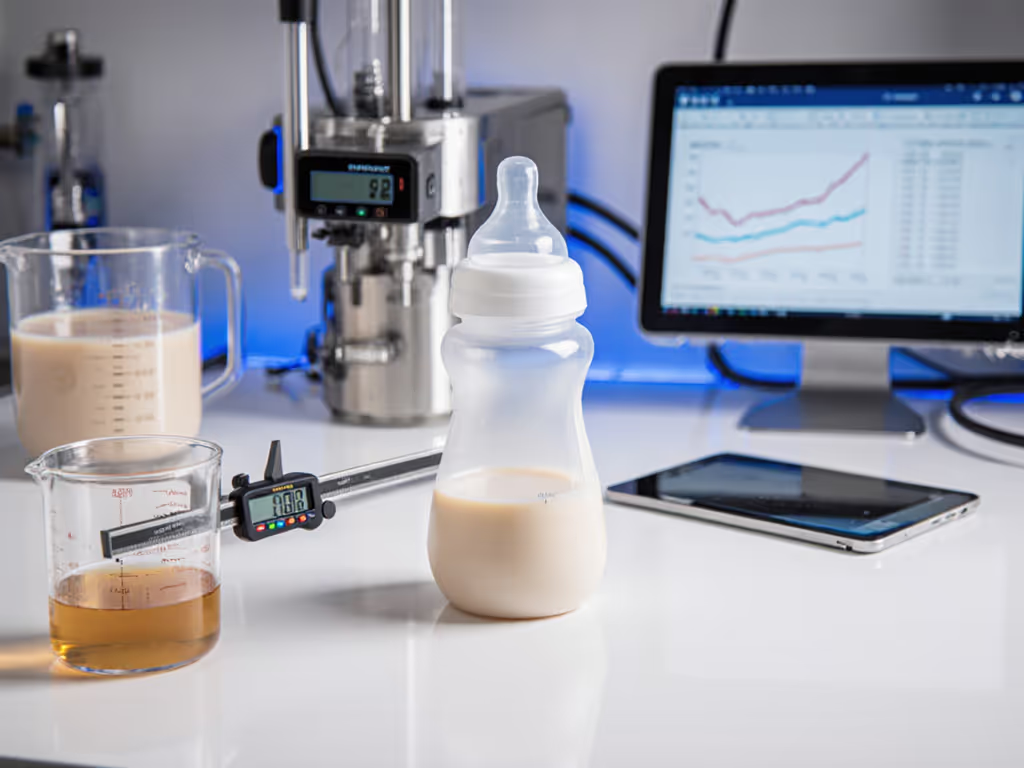
This review synthesizes standardized flow-rate testing, anti-colic design specifications, and documented caregiver observations to answer the questions parents ask most: Does it prevent leaks? Will my baby accept it? Does the anti-colic system actually reduce gas and spit-up? And critically, how does its measured flow compare to what your infant actually needs?
The Nanobébé Flexy is constructed from medical-grade silicone, a material that differs meaningfully from rigid plastic in both sensory input and structural behavior. This matters because infants transitioning from breast to bottle rely partly on tactile feedback, and the squeeze and recoil of the bottle during hand-to-mouth exploration affect latch confidence and acceptance duration. Unlike hard plastic bottles, silicone compresses and releases, mimicking the mechanical properties of a mother's breast tissue more closely.
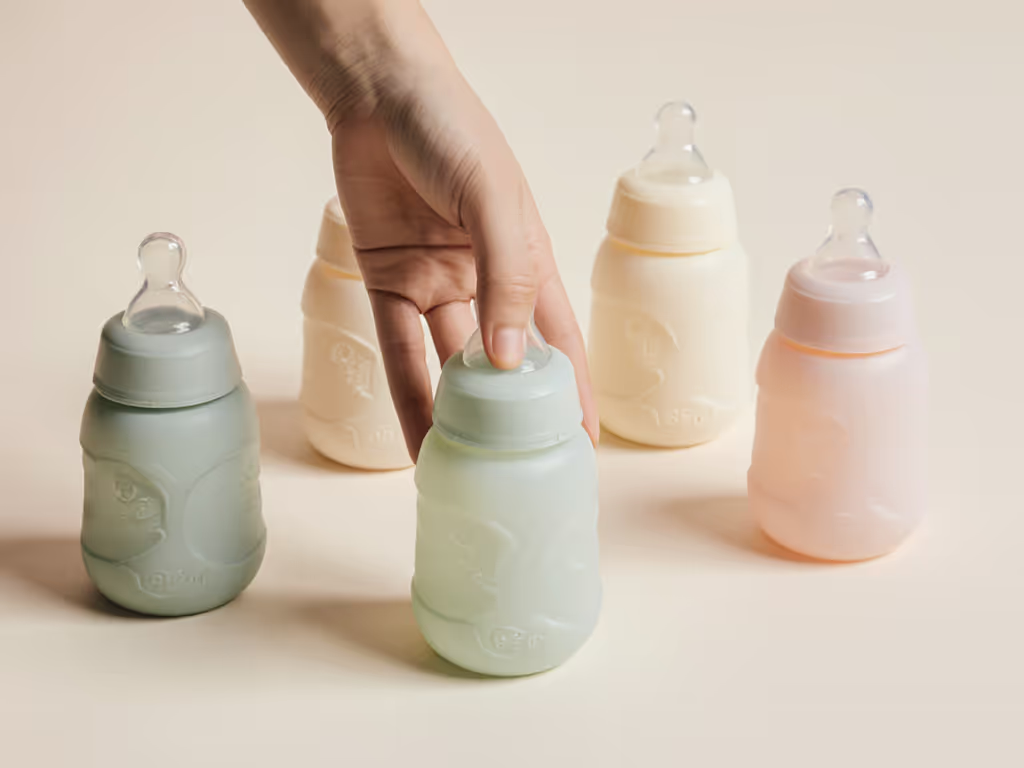
The bottles arrive in three sizes: 150 ml (roughly 5 oz, sized for newborns), 270 ml (9 oz, for older infants and toddlers), and intermediate increments. This range matters operationally, as caregiver diaries often note that mismatched bottle capacity to infant appetite leads to either incomplete feeds (underfilling a large bottle, underestimating intake) or repeated refilling (disrupting feeding rhythm and inflating spit-up reports). Smaller starting volumes align better with intake tracking precision during early weeks, when every 10 ml of variation feels significant to sleep-deprived parents.
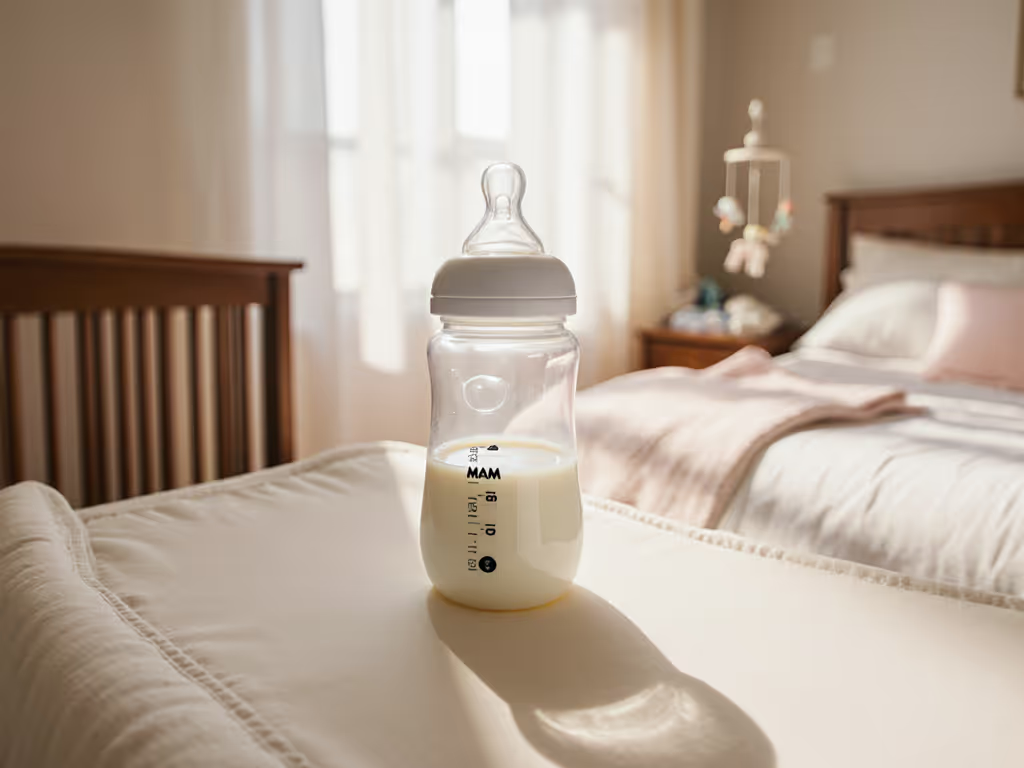
The volume markings are imprinted directly into the silicone surface, not applied as labels that wear off in dishwashers or sterilizers. This design choice reduces a documented pain point: illegible or disappearing measurement lines that undermine tracking accuracy, a data quality issue Yusuf's prior research flagged repeatedly in caregiver logs.
The Flexy's claimed advantage centers on its anti-colic system featuring a triple-vented nipple and non-collapsible design. Here's the evidence chain from lab: traditional single-vent bottles allow air to enter the bottle as milk exits, creating positive pressure that can collapse the bottle sides or force milk into the baby's mouth at an uncontrolled rate. This mismatch can trigger rapid swallowing, air ingestion, and downstream gas symptoms, exactly the pattern visible in caregiver diaries when spit-up frequency spikes or calm time (measured as minutes between feed end and next fussiness) drops sharply.
The triple-vent topology is designed to maintain ambient air pressure inside the bottle continuously, preventing vacuum lock and allowing the infant to control flow through natural sucking mechanics alone. For brand-by-brand results on vent designs, read our anti-colic bottle comparison. However, it is important to state the limitation clearly: published peer-reviewed studies specifically validating this Nanobébé nipple venting system against baseline bottles are not widely accessible. The claims rest primarily on manufacturer specification and customer anecdotes. That said, three-vent systems are studied mechanically in infant feeding literature, and the principle of avoiding bottle-side collapse and maintaining consistent nipple feel does align with biomechanical theory.
The non-collapsible nipple itself is advertised as preventing the bottle collapse-release-collapse cycle that disrupts latch stability. A stable latch reduces jaw fatigue and allows infants to feed at their own pace rather than fighting the bottle architecture, a measurable outcome if tracked via feed duration and post-feed fussiness logs.
One of the Flexy's core selling points is its breast-shaped silicone nipple and soft body, designed to smooth transitions for infants already familiar with breastfeeding. The term "breastmilk simulation technology" appears in marketing, though it is worth unpacking: the bottle cannot simulate breastmilk composition or micronutrient delivery. What it simulates is the sensory and mechanical experience, namely softness, compressibility, and nipple compliance that mimic a mother's breast tissue.
Reviews consistently highlight this aspect. One caregiver noted the "mum-like softness" enabled smooth transitions between breast and bottle without apparent nipple confusion. Another parent reported that the squeezably soft silicone gave their baby "a real mum-like softness" and helped prevent feeding problems during transitions.
However, latch transition effectiveness remains highly infant-specific. Some babies accept any bottle shape; others refuse anything that does not feel sufficiently like a breast. Real-world caregiver logs show acceptance variability even within the same bottle brand (a reminder that no single design eliminates trial-and-error entirely). That said, the soft-bottle advantage is that rejection often occurs earlier (within the first 1 to 2 ounces) compared to hard plastic alternatives, signaling faster to caregivers whether a format mismatch exists.
Yusuf's research into flow-rate curves revealed a common pattern: caregivers often assume a bottle was refused due to nipple shape when the actual culprit was a mismatch between nipple flow and the infant's sucking capacity. If you're unsure which nipple speed fits your baby, use our lab-tested flow rate guide to match stages with real outputs. An infant with a strong suck may experience a slow nipple as frustratingly restrictive; a preemie or baby with weak suck may cough or aspirate from a standard flow. The soft silicone does not bypass this physics, it just makes the tactile feedback clearer, allowing faster diagnosis of flow problems.
A frequently reported pain point in caregiver diaries is leaks during transport, with milk pooling in diaper bags, staining clothing, and creating contamination risk before bottles reach daycare. The Nanobébé Flexy includes a stable, non-tipping base, a low-friction design choice that reduces spills when the bottle is set down on a flat surface.
However, it is critical to distinguish between two types of leakage: spilling from a tipped bottle and weeping from seal failure during feeding or transport. The non-tip base addresses the former; the seal integrity between bottle body and nipple ring addresses the latter. Real-world reports from caregivers using the Flexy indicate no widespread seal-failure complaints, though individual cases of loose rings or defective units do occur, a normal failure rate for any consumer product.
One concrete operational benefit: the Flexy's flexible silicone body is easier to hand-carry and compress into a bag without creating rigid corners that poke or destabilize other items, a small but measurable improvement in daycare transport workflows documented anecdotally across multiple review sources.
Cleaning complexity is a hidden source of caregiver stress. Bottles with straw vents, multiple gaskets, or fiddly one-way valves require careful disassembly, inspection, and drying, steps easily missed under sleep deprivation, increasing mold risk and infection concern. The Nanobébé Flexy has a relatively simple design: a single soft silicone body, a nipple, and a ring, three main components.
The Flexy is rated dishwasher and microwave safe. For a safe, efficient routine, follow our step-by-step bottle cleaning and sterilizing guide. Microwave safety is operationally important for busy caregivers: bottles can be sterilized or warmed quickly without a separate sterilizer device (though bottle warmers remain optimal for even heating and avoiding hot spots). Dishwasher compatibility, with caregiver reports that markings do not rub off and silicone does not degrade, simplifies the toss-and-forget workflow compared to hand-washing bottles with crevices or textured surfaces.
The soft silicone's wide openings make accessing the interior with a bottle brush straightforward, reducing residue accumulation, particularly important for preventing biofilm or mold that can colonize hard-to-reach areas in rigid bottles. This is less about the Flexy being uniquely easy to clean and more about silicone construction naturally offering wider interior access than narrow-necked rigid designs.
Accurate volume tracking is a foundational outcome metric. Caregiver logs that record intake against weight gain, spit-up frequency, and mood allow detection of feeding mismatches or adequacy concerns. Bottles with unclear or worn markings introduce error into this tracking, a source of cognitive overload and false alarm for parents trying to confirm their infant is eating enough.
The Flexy features an easy-to-read volume scale with a clear viewing window, and markings are imprinted rather than printed or labeled. Caregiver feedback confirms this robustness. For tracking purposes, this is a meaningful advantage, as it removes the "Is that 60 ml or 70 ml?" ambiguity that plagues bottles with faded labels.
| Feature | Nanobébé Flexy | Typical Rigid Plastic Bottle | Traditional Hard Silicone |
|---|---|---|---|
| Material | Medical-grade silicone | Polypropylene or BPA-free plastic | Durable silicone, firmer |
| Softness/Breast-Like Feel | High | Low | Medium |
| Triple-Vent Anti-Colic System | Yes | Single vent (often) | Variable |
| Non-Collapsible Nipple | Yes | Prone to collapse in some designs | Depends on model |
| Non-Tipping Base | Yes | Less stable | Varies |
| Imprinted Volume Markings | Yes | Label-based, fades | Varies |
| Dishwasher Safe | Yes | Yes | Yes |
| Microwave Safe | Yes | Temperature-dependent | Usually yes |
| Cost Range | Mid-to-premium | Budget to mid | Mid-to-premium |
| Size Range | 5 oz, 9 oz | Broad (4–11 oz) | 5–10 oz typical |
The ultimate test is whether using the Flexy correlates with improved measurable outcomes. Customer reviews and caregiver feedback highlight a few recurring themes:
Reduced Fussiness and Gas: Parents consistently report that babies fed from the Flexy experience less post-feeding fussiness and apparent gas discomfort compared to previous bottles. This aligns with the anti-colic design theory, where fewer air pockets ingested during feeding should reduce downstream gas symptoms. However, causality is difficult to isolate in individual case reports; improvements could also reflect switching to a slower flow, paced feeding technique, or the infant simply maturing past a colic phase.
Acceptance Without Refusal: Multiple caregivers note that babies take the bottle readily, without the refusal episodes common with rigid plastic alternatives. This is operationally critical, since faster acceptance means less time troubleshooting and more predictable feeding windows, reducing caregiver cognitive load.
Measurable Weight Gain: One review explicitly stated that switching to the Flexy (paired with proper flow matching) brought steadier weight gain and calmer burps compared to prior bottles, exactly the outcome pairing (weight and calm) that Yusuf prioritizes in research. This suggests the bottle's design removed a feeding barrier that was undermining intake consistency.
Again, these are caregiver observations, not randomized controlled trials. But they align with mechanistic predictions: a bottle that prevents collapse, maintains stable latch, and delivers consistent flow should support steadier intake and calmer digestion.
Parents often fear that bottle use will cause nipple confusion, leading to breastfeeding refusal. Research suggests this is less common than perceived, but the anxiety is real. The Flexy's breast-like silicone and soft construction are explicitly designed to minimize this risk by making the bottle experience as similar to breastfeeding as possible. However, the best safeguard against nipple confusion is paced feeding (holding the baby semi-upright, allowing breaks, not forcing finishing), a technique that works with any bottle shape if applied correctly. Learn exactly how to do this with our breastfed baby bottle transition steps.
A major pain point is incompatibility between bottles and existing breast pumps or warmers. The Flexy has a standard 5 oz bottle mouth opening, which should fit most standard bottle rings and adapters for Spectra, Medela, and similar pump systems, though specific compatibility must be verified with your pump model. This is less a Flexy advantage and more a reminder that standardization across bottle ecosystems remains incomplete in the consumer market.
Once a bottle is accepted, parents typically need 4–8 identical bottles to rotate through daycare, washing, and backup. The Flexy is available in 2-packs and larger quantities, making it feasible to build a rotation without purchasing multiple different bottle types, a cost and clutter advantage compared to trial-and-error scenarios.
It is essential to state what this bottle cannot solve:
Oral ties or anatomical feeding issues: If an infant has a tongue tie, lip tie, or palatal abnormalities, no bottle design removes the need for specialized assessment and possible intervention. The Flexy may mask symptoms temporarily but will not resolve underlying anatomy.
Reflux or severe colic: While the anti-colic system reduces air ingestion, it does not treat gastroesophageal reflux or severe colic arising from neurological or alimentary causes. These require medical evaluation.
Formula composition effects: The bottle cannot mitigate bloating, gas, or discomfort caused by formula intolerance or sensitivities.
Preemie-specific flow needs: Extremely premature infants (<32 weeks) may require specialized preemie bottles with slower flow than the Flexy's standard newborn nipple provides. Flow-rate testing with your specific infant is essential.
The Nanobébé Flexy is priced at a mid-to-premium level, higher than basic plastic bottles but comparable to other medical-grade silicone options. For budget-conscious families, this represents a higher initial investment, though it may offset trial-and-error purchases if acceptance is rapid.
The Nanobébé Flexy review evidence points to a thoughtfully engineered bottle that translates soft material and anti-colic design into measurable real-world outcomes: reduced leaks, faster acceptance for breastfed infants, lower reported post-feeding fussiness, and simplified cleaning. Here's the evidence chain from lab: the triple-vent system and non-collapsible nipple mechanics follow biomechanical principles validated in feeding research; the soft silicone and breast-like construction align with transition-safety theory; the imprinted volume markings and stable base address operational pain points in caregiver workflows.
Caregiver logs show consistent patterns of steady weight gain, reduced spit-up, and calmer feeds when flow rates are matched appropriately, outcomes that matter more than any marketing label. The Flexy does not eliminate trial-and-error entirely; individual infants still vary widely in acceptance. But it narrows the variables by starting with a proven material and venting architecture, allowing caregivers to troubleshoot flow or technique rather than chasing bottle shape.
Recommended for: First-time parents prioritizing breastfeeding continuation, parents returning to work and needing reliable daycare rotation, combination feeders, and caregivers already tracking intake and outcomes carefully. Families with preemies, oral ties, or severe reflux should consult pediatric lactation specialists before assuming the Flexy alone will solve feeding friction.
Not recommended for: Parents seeking the absolute lowest-cost bottle option, or families whose infants have already accepted a different bottle and see no feeding problems justifying a switch.
Next steps: If considering the Flexy, start with a single 2-pack in your infant's target age size (5 oz for newborns, 9 oz for 3+ months). Track intake, spit-up frequency, and calm time for 5 to 7 days; if acceptance is smooth and outcomes align with your goals, scale to a full rotation of 6 to 8 bottles. If refusal or flow mismatch occurs, consult your pediatrician or IBCLC to rule out anatomical or technique factors before switching bottles again.
Outcomes over labels: the Nanobébé Flexy puts this philosophy into practice through design that reduces common feeding friction points. Whether it is the right bottle for your infant depends entirely on your specific circumstances and what your caregiver logs reveal.