
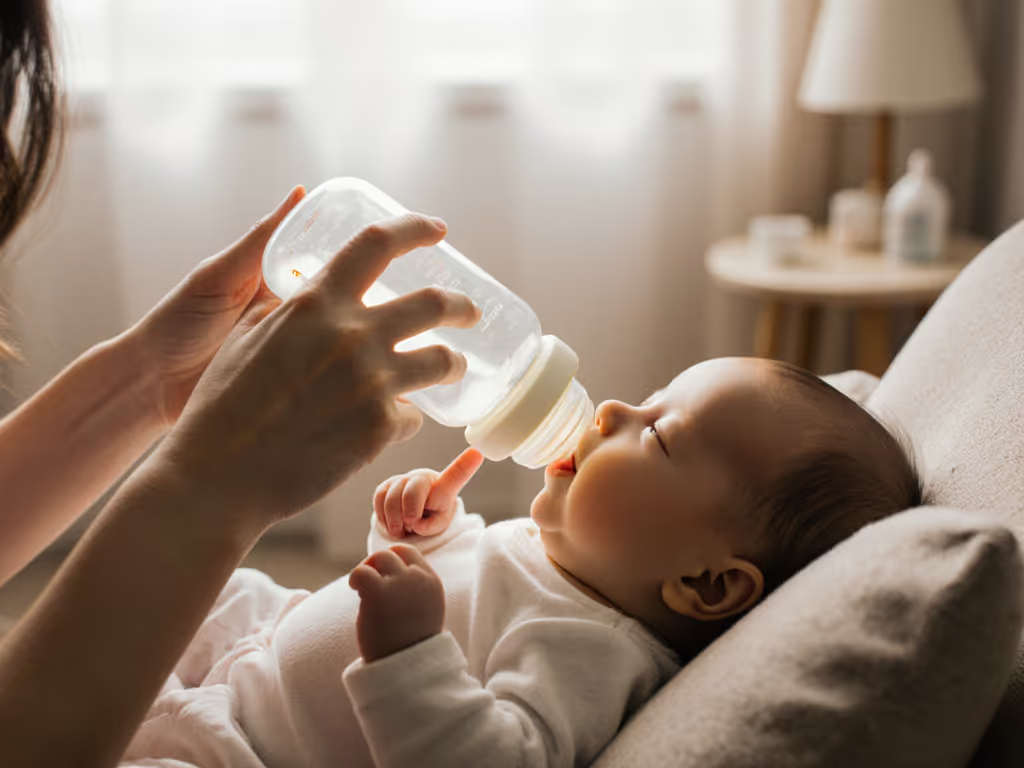
Responsive Bottle Feeding: Steps to Build Baby's Self-Regulation
10th May•8 min read
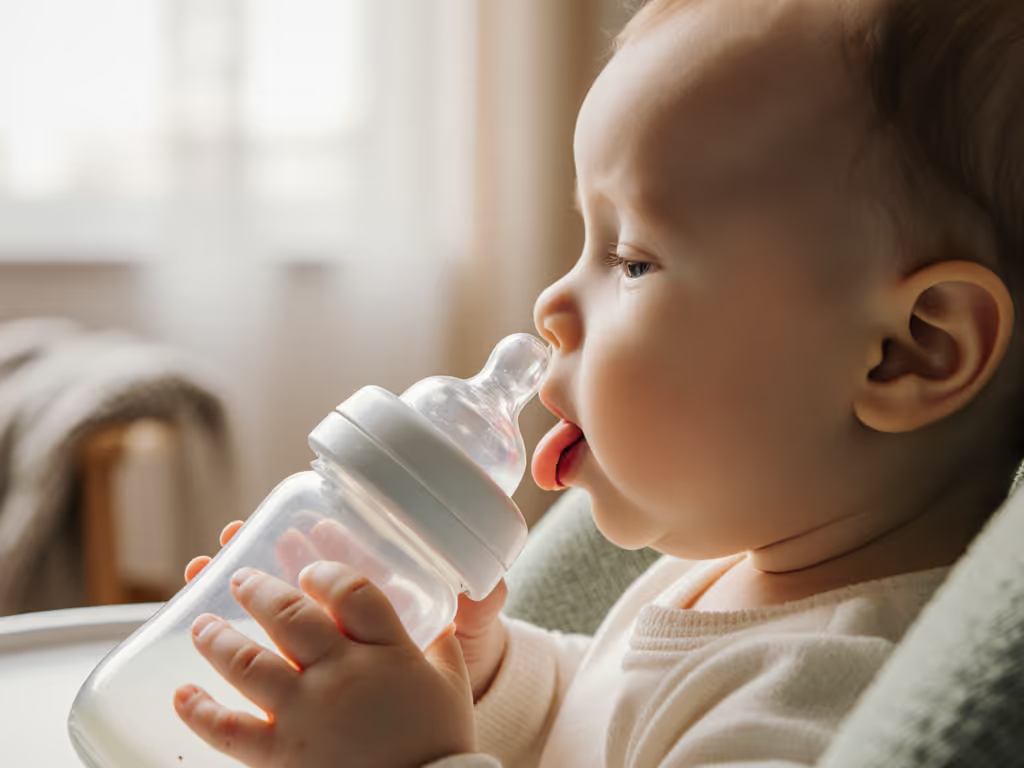
Bottle feeding and speech development are linked in ways that many parents don't anticipate, and the connection comes down to muscle coordination and timing, not simply the act of feeding itself. Research confirms that oral motor skills in infants develop through the mechanics of feeding, and the timing of bottle introduction, as well as how long sucking behaviors persist, influence the clarity and pace of early speech acquisition.[1][2]
This matters because parents often view feeding as a singular goal: nutrition. Yet feeding is simultaneously a motor-learning experience. The mouth, tongue, jaw, and coordination between breathing and swallowing during feeding build foundational structures and reflexes that later support speech sound production.[3] For a quick primer on how parts like nipples, vents, and neck shapes influence feeding mechanics, see our baby bottle anatomy guide. The question, then, isn't whether to bottle-feed; it's how, when, and for how long, and whether the feeding techniques' impact extends measurably into speech outcomes. The evidence exists; the interpretation requires care.
Bottle feeding and breastfeeding both demand coordinated muscle activation. The jaw, lips, tongue, and soft palate must work in concert to create suction, manage liquid flow, and coordinate swallowing with breathing.[3] This muscular choreography isn't incidental; it's formative. Breastfeeding promotes specific mobility, strength, and posture of the speech organs: lips, tongue, maxilla, mandible, cheeks, soft palate, hard palate, dental arch, and floor of mouth.[1]
Bottle feeding does engage these same structures, but the demands differ. A bottle nipple delivers milk differently than the breast does, and the muscular patterns required are not identical. For latch-specific trade-offs, explore our wide-neck vs standard bottles comparison with lactation consultant insights. One outcome is variable: some studies report no measurable speech differences between breast-fed and bottle-fed children, while others document associations between breastfeeding and improved speech clarity, particularly in male children and across tonal quality measures.[4][5]
Timing (not feeding method alone) emerges as a critical variable. Research from a Chilean Patagonia cohort of 128 children (ages 3-5 years) found that delaying bottle introduction until 9 months or later showed a protective effect against speech disorders, with children exhibiting less than one-third the relative odds of subsequent speech disorders compared to early introducers (OR: 0.32, 95% CI: 0.10-0.98).[1][2]
This protective window matters because prolonged exclusive breastfeeding allows the oral structures to develop under one consistent muscular demand before a second pattern is introduced. The transition itself (if delayed) allows more mature motor control to be in place when the child encounters a bottle.
The research does not suggest that bottle feeding is inherently speech-damaging if timed and managed carefully. Instead, prolonged non-nutritive sucking behaviors (pacifier use lasting 3 or more years and finger-sucking) carry measurable associations with speech disorders.[1][2]
Specific odds ratios from the same Chilean cohort:
The distinction is important: bottle feeding used for nutrition (especially when discontinued or substantially reduced by 12-18 months) does not carry the same risk profile as sustained, non-nutritive sucking. Once a child can drink from a cup, the sucking habit naturally diminishes.
Prolonged sucking beyond the first 2-3 years may interfere with normal palatal and dental arch development, particularly in the back of the mouth and palate region where resonant sounds (like 'ng' in going and 'm' sounds) originate.[3] Insufficient muscular growth and postural adaptation in these areas can ripple into articulation difficulties.
At 2 a.m., a fussy newborn and a kitchen scale taught me to time 30 mL runs and log drips per minute across six 'slow' nipples. Two outpaced the baby's rhythm; one leaked at the collar. The one that matched his actual flow kept him calm through the feed. The precision mattered, but so did when we used it: at 5 months, bottle feeding was nutritive; by 15 months, it was nostalgic. The transition window is not accidental; it's critical. Measured bottle flow rate correlates closely with language development, feed duration, intake consistency, and whether the child enters speech milestones on typical timelines or with compensatory patterns in place.
Not every child exposed to bottle feeding develops a speech concern. Risk is conditional on dose, duration, and individual anatomy. To assess your own feeding landscape, ask:
When did bottle feeding begin? Earlier than 6 months carries marginally higher risk if it becomes the dominant mode; starting after 9 months is associated with lower risk.[1][2]
Is the bottle the sole or primary source after 12 months? Sustained bottle feeding past the first year is not directly causal for speech delay, but the transition to cups around 12-18 months remains crucial.[9]
Are non-nutritive sucking habits (pacifiers, fingers, thumbs) still active after age 3? This is where the literature shows the strongest associations.[1]
Are feedings paced and responsive? If bottle flow rate is too rapid, the child may not develop full muscular engagement; too slow, and frustration may emerge. Flow should be tested under standardized conditions: upright posture, consistent bottle angle, and timed measurement of output over a fixed interval. To apply this in real life, use our responsive bottle feeding guide to follow your baby's cues and pace intake. Tested, not assumed: flow, seal, and fit tell the story.
Compatibility, then performance, ثم outcomes. If your infant is 0-6 months old and combination feeding (breast and bottle), ensure:
If your infant is 6-12 months: For a step-by-step timeline of transitions and signs of readiness, see our bottle stages transition guide.
If your child is 12+ months:
The evidence linking bottle feeding duration to speech outcomes is observational, not experimental. The Chilean study was rigorous in design (parent-reported feeding history, trained speech pathologist assessment of phonological processes), but causality cannot be assumed.[1][2] Children bottle-fed beyond 9 months do not inevitably develop speech disorders; the elevated odds reflect statistical association across a population, not individual destiny.
Breastfeeding shows consistent associations with improved speech clarity (especially in boys) and tonal quality, but again, bottle-fed children's speech development falls within normal ranges in the majority of cases.[4][5]
The research does not support catastrophizing about bottle feeding. Millions of children bottle-fed exclusively develop typical speech. What the data support is timing awareness: delaying bottle introduction and discontinuing it by 18 months (especially if combined with minimal pacifier use after age 2-3) aligns with lower population-level risk for speech concerns.
Sex may also matter; some studies suggest breastfeeding's speech benefit is more pronounced in boys, though the mechanism is unclear.[4][5]
Consider consulting a pediatric speech pathologist if:
These are not direct results of bottle feeding but may indicate underlying motor or neurological factors worth exploring with objective assessment.
Infant communication skills develop across multiple channels: social interaction, responsive caregiving, read-alouds, and play, not feeding method alone. Bottle feeding, timed thoughtfully and transitioned predictably, need not compromise speech development. The research invites not avoidance but intentionality: establish a feeding timeline that aligns your introduction, duration, and weaning practices with oral-motor development milestones.
Parents often ask whether they should bottle-feed at all. The answer is contextual: return-to-work schedules, milk supply, adoption, and countless other realities make bottles essential for many families. The actionable insight from the evidence is simpler: the timing and duration of bottle feeding, rather than bottle feeding itself, predict measurable differences in early speech development.[1][2] Plan your introduction, track your transition windows, and discontinue bottle feeding by 18 months where possible. Compatibility, then performance, ثم the outcome: calmer feeding, clearer speech, and less parental second-guessing.
If you want to deepen your understanding of feeding's role in speech development:
The research exists; your question matters. Feeding with intention, informed by data, not marketing, remains the most reliable path forward.