
Responsive Bottle Feeding: Steps to Build Baby's Self-Regulation
10th May•8 min read

How do bottle-feeding, sleep patterns, and feeding timing actually connect? The short answer: not as directly as many parents assume, but the relationship, when examined through caregiver logs and standardized flow data, reveals patterns worth understanding. This deep dive explores what the evidence shows about how flow rates, feeding schedules, and bedtime routines shape infant sleep, and what doesn't live up to the hype.
Not reliably. This is one of the most persistent myths in infant feeding, and the data pushes back firmly. One study of 715 mothers with infants aged 6 to 12 months found that no meaningful difference existed in night wakings or night feeds between breastfed and formula-fed infants[4]. In fact, formula-fed babies on average sleep only about 30 minutes longer between feeds than breastfed babies, a gap many parents find negligible in practice[3]. For a deeper look at how feeding method affects sleep quality, read our sleep fragmentation comparison.
What does change with feeding choice is parental response to night wakings, not the wakings themselves. Bottle-feeding parents more often try rocking, shushing, or a dummy, whereas breastfeeding parents default to feeding as a soothing tool[3]. But waking up? That happens regardless of what's in the bottle.
Timing matters, but perhaps not how you'd expect. When infants received more milk or solid feeds during the day, they were less likely to feed at night, but not less likely to wake[4]. Calorie shifting can reduce nighttime hunger feeds, yet infants still woke for non-nutritive reasons: comfort, developmental cycles, or simply the need for parental contact[3][4]. To front-load calories without creating night props, try these practical bottle-feeding routines.
This distinction is crucial. Outcomes over labels; the actual outcome here is that increased daytime intake changes feeding patterns, not inherently sleep patterns.
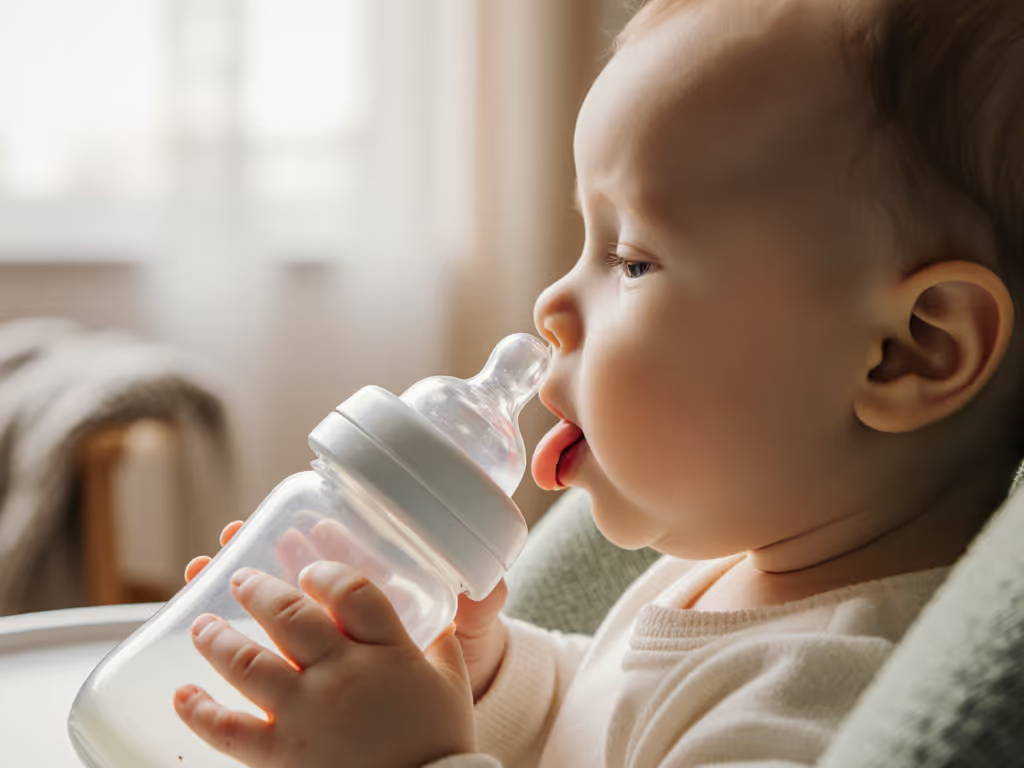
Putting an infant to bed with a bottle creates a separate timing issue: feed-to-sleep association. Research on 299 mother-infant dyads found that putting an infant to bed with a bottle at 2 months predicted higher sleep onset latency, more time awake at night, and more frequent night wakings by 6 months[1]. The bottle becomes a required sleep prop rather than a nutritional tool. Avoid common pitfalls like bottle-to-bed with our bottle feeding mistakes guide.
Here, the data shows a dose-response effect. Infants bottle-fed three or more times at night had 6.952 times higher odds of sleep disturbance (95% CI = 1.364 to 35.427) compared to those fed less frequently[2]. For comparison, infants breastfed three or more times at night also showed elevated odds (5.006 times higher; 95% CI = 1.229 to 20.400), suggesting that frequent nighttime feeding itself (regardless of method) correlates with reported sleep problems[2].
This raises a chicken-or-egg question: Do frequent feeds disrupt sleep, or do infants with naturally disrupted sleep patterns feed more often? The evidence hints at both. One study of mother-infant pairs showed that infant nighttime sleep metrics and waking frequency at 6 months actually predicted greater maternal use of bottle-to-bed at 14 months[1], supporting a transactional model where parents adapt feeding approaches to already-disrupted sleep.
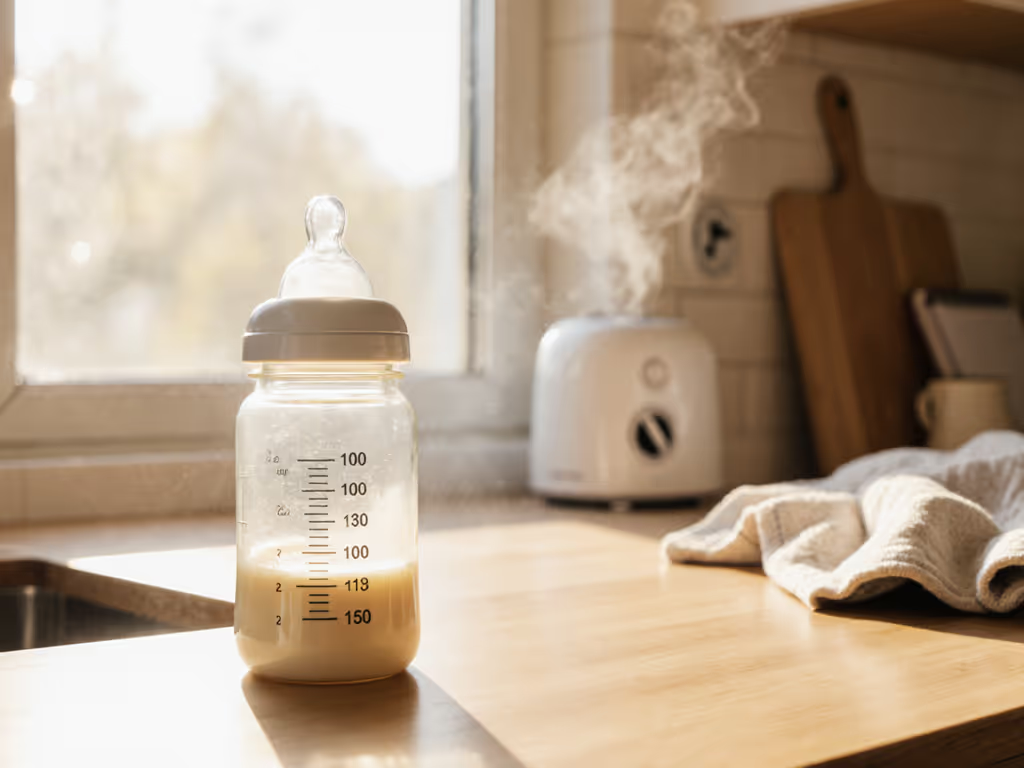
Flow rate is where standardized testing shines, and where marketing labels often disappoint.