

Responsive Bottle Feeding: Steps to Build Baby's Self-Regulation
10th May•8 min read
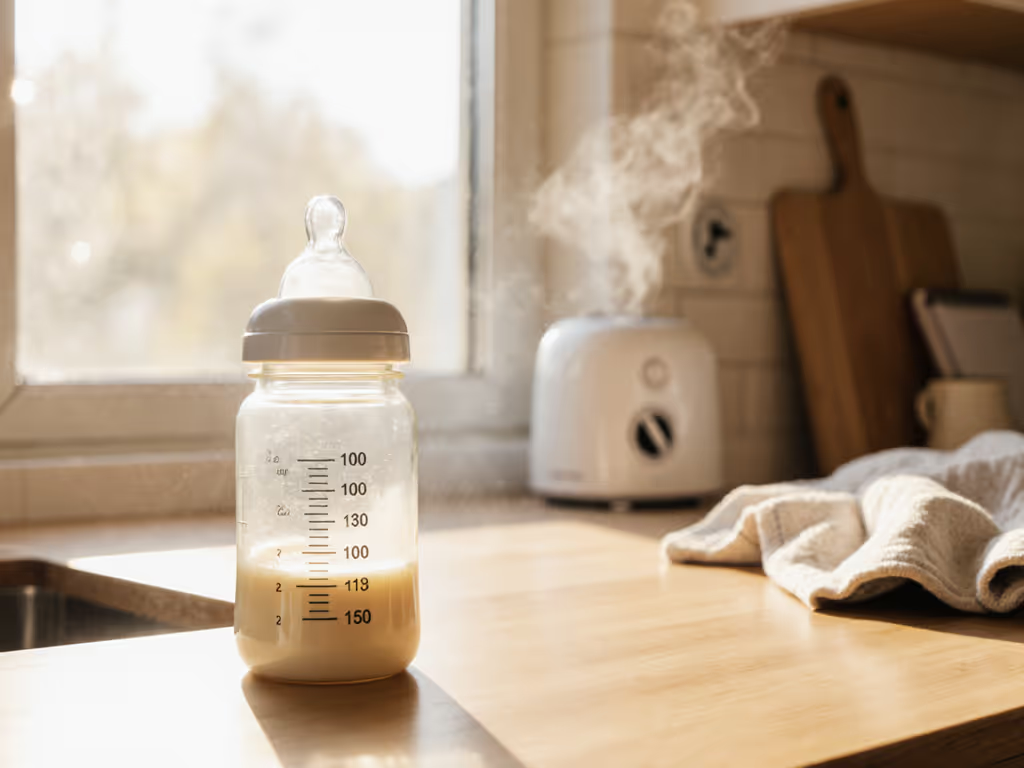
When establishing an infant feeding schedule for exclusively formula-fed babies, timing alone tells only half the story. The rhythm of feeding depends equally on how your baby accepts the bottle. What if your baby's refusal to feed at "scheduled" times isn't about hunger cues, but about comfort with the bottle itself? Through years of analyzing caregiver feeding diaries alongside ergonomic research, I've found that observing acceptance cues, not clock-watching, creates calmer, more predictable feeding patterns. Comfort first, then compatibility; calmer feeds shape better habits.
Newborns typically signal hunger every 2-3 hours, averaging 8-12 feedings in 24 hours. By one month, many settle into taking 3-4 ounce feedings every 3-4 hours. At 4 months, this often shifts to 4-6 ounces per feeding, and by 6 months, most babies consume 6-8 ounces about 4-5 times daily. However, these patterns only emerge when the bottle setup supports natural feeding mechanics.
Watch for observable signs rather than forcing rigid schedules: a baby who turns away from the bottle while smacking lips may need flow adjustment, not necessarily more formula.
The American Academy of Pediatrics confirms that healthy infants typically consume 24-32 ounces of formula daily during their first year. But what the charts don't show is how infant feeding frequency fluctuates based on bottle acceptance. When flow rate or latch angle mismatches your baby's natural rhythm, feeding becomes stressful, leading to either rushed gulping or premature refusal. To match nipple stage to your baby's pace, use our lab-tested flow rate guide.
Your baby communicates comfort through subtle physical signals during feeding. These aren't random behaviors but direct responses to how the bottle performs:
I once observed two babies in the same toddler room accepting identical bottles completely differently. Learn how modern vent systems prevent vacuum and reduce air intake in our complete guide to bottle vents. One settled only when we widened the latch angle and slowed the flow; the other needed a narrower teat and faster pace. This taught me that comfort cues predict acceptance better than brand names or marketing tiers ever will.
Rather than imposing a fixed schedule, build feeding patterns around what your baby shows you. This method reduces trial-and-error while creating predictable rhythms:
Keep a simple log noting:
Look for connections between bottle performance and feeding duration. For example:
One change at a time. Modify only one element between feeds:
Document changes and observe acceptance patterns over 24-48 hours before making another adjustment. For the science behind tilt and angled designs, see anti-colic bottle angles explained.
Rather than fixed times, identify your baby's natural feeding window (typically 20-40 minutes within a predictable timeframe). For example, instead of "feed at 9 AM exactly," recognize "between 8:45-9:25 AM, my baby reliably shows hunger cues when the bottle setup meets their needs."
Certain patterns indicate your current bottle may be disrupting natural feeding rhythms:
Remember that what works today may need adjustment in 2-4 weeks as your baby's oral-motor skills develop. The goal isn't finding a "perfect" bottle forever, but understanding how to read acceptance cues as your baby grows.
To maintain your bottle-adapted schedule across caregivers:
Your baby's feeding pattern will naturally evolve as they grow, but the principle remains constant: watch the comfort cues, not just the clock. If you're moving away from clock-based timing, follow our responsive bottle feeding guide. An effective infant feeding chart serves as a starting point, but your daily observations create the true roadmap. When you honor both timing and acceptance, you'll notice calmer feeds that fit naturally into your day.
Your actionable next step: For your next three feedings, document not just when you feed, but how your baby accepts the bottle (specifically noting jaw movement rhythm and lip positioning). These observable details will reveal more about your ideal feeding schedule than any generic chart ever could. One change at a time, you'll build a rhythm that works for both of you.