
Baby Bottle Evolution: How Innovations Solved Feeding Challenges
31st Mar•7 min read

Nearly 60% of breastfed babies experience difficulty when introduced to bottles, often leading to feeding struggles and parental frustration. Finding the right bottle design is more than a convenience—it shapes your baby's ability to switch easily between breast and bottle. A smart choice can support consistent feeding, help prevent nipple confusion, and keep the breastfeeding bond strong while meeting your infant’s unique needs.
| Point | Details |
|---|---|
| Bottle Design Matters | Select bottles that mimic natural breastfeeding mechanics to prevent nipple confusion. |
| Flow Rate Matching | Choose bottles with flow rates that correspond to your baby's developmental stage. |
| Gradual Introduction | Introduce bottle feeding gradually after establishing breastfeeding to ensure continuity. |
| Personalized Approach | Assess your infant's unique feeding cues and preferences during bottle selection to avoid common mistakes. |
Choosing the right bottle for breastfed babies isn't just about convenience - it's about maintaining breastfeeding compatibility and supporting smooth feeding transitions. Traditional bottles can disrupt the delicate breastfeeding relationship by introducing different sucking mechanics that confuse infants.
Breastfed babies require bottles with specialized design features that mimic natural breastfeeding. These precision-engineered bottles typically include:
Research underscores the critical nature of bottle selection. A randomized controlled trial investigating feeding methods in preterm infants demonstrated that careful bottle choices significantly impact breastfeeding success. Specifically, alternative feeding approaches and thoughtfully designed bottles can help maintain breastfeeding continuity and reduce potential disruptions.
Parents should prioritize bottles designed with breastfeeding transition in mind.
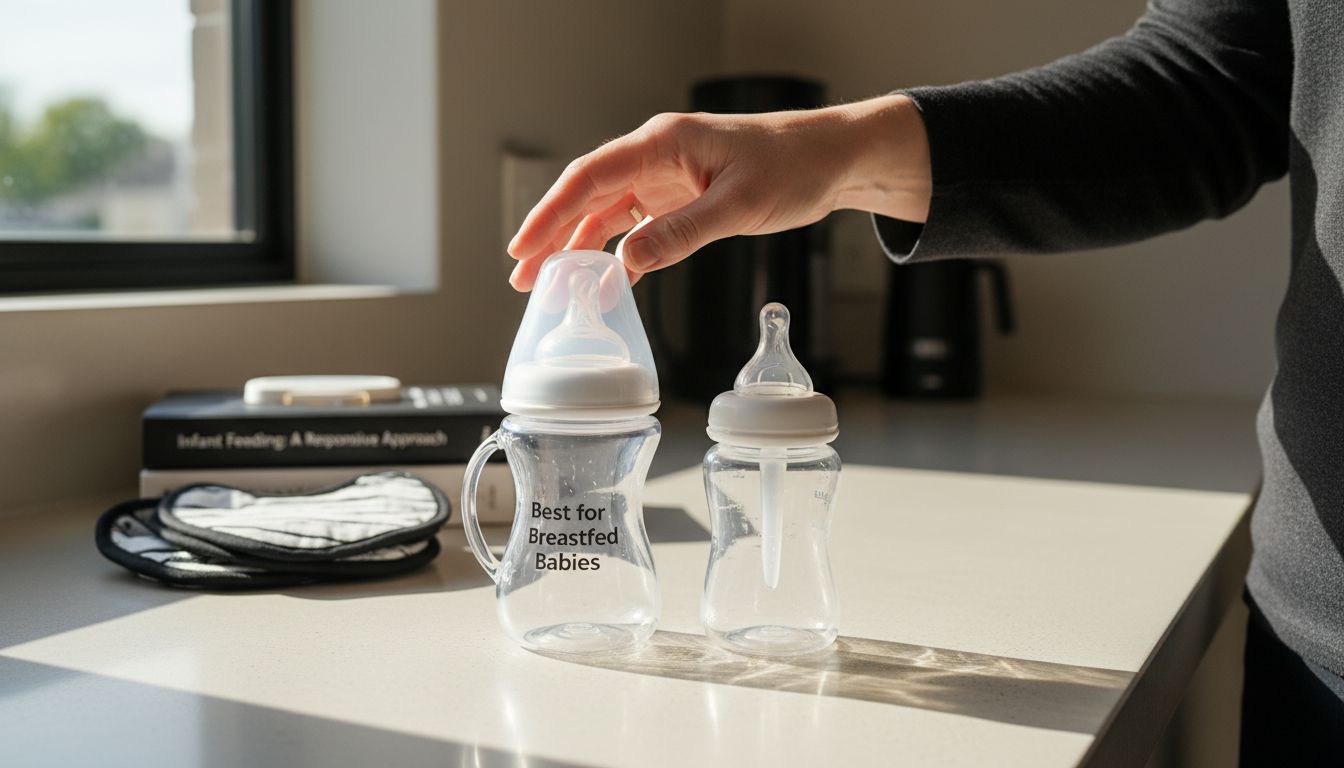 Look for bottles that require similar sucking techniques as breastfeeding, with rounded nipple bases and graduated flow rates. By selecting bottles engineered to support breastfeeding mechanics, parents can help ensure a smoother, more comfortable feeding experience for their infant.
Breastfeeding parents often encounter a complex challenge known as nipple confusion, a subtle yet significant disruption in an infant's feeding pattern that can derail breastfeeding success. This phenomenon occurs when babies struggle to switch between breast and bottle due to fundamental differences in sucking mechanics and milk flow.
Nipple confusion emerges from critical mechanical differences between breastfeeding and bottle-feeding:
According to clinical research, nipple confusion represents more than a simple feeding inconvenience. A specialized study introduced a formal definition describing it as an infant's difficulty in achieving the correct oral configuration and latching technique after exposure to artificial nipples. The research highlighted that babies must reconfigure their entire mouth and sucking strategy when transitioning between breast and bottle.
To minimize nipple confusion, parents should strategically select bottles that mimic natural breastfeeding mechanics. Seek bottles with slow-flow nipples, soft silicone materials, and designs that require similar tongue and jaw movements as breastfeeding. Introducing bottles gradually, preferably after breastfeeding is well-established, can also help prevent potential feeding disruptions and support a smoother infant feeding experience.
Designing bottles that authentically replicate breastfeeding mechanics requires a deep understanding of infant feeding dynamics. Biomimetic bottle design focuses on creating feeding tools that closely mirror the natural breastfeeding experience, minimizing potential disruptions to an infant's established feeding patterns.
Key features of breastfeeding-mimetic bottles include:
Here's a comparison of critical bottle features for breastfed babies:
| Feature | Breastfeeding-Compatible Bottle | Standard Bottle |
|---|---|---|
| Nipple Shape | Rounded, breast-shaped | Narrow, generic |
| Flow Rate | Slow, adaptive | Fast, uniform |
| Material | Soft silicone | Firm silicone or plastic |
| Venting System | Advanced, anti-colic | Basic or none |
| Sucking Effort Required | High, mimics breastfeeding | Low, minimal resistance |
Research consistently demonstrates that thoughtful bottle design can significantly impact infant feeding success. A randomized controlled trial investigating feeding methods in preterm infants revealed that careful bottle selection plays a crucial role in maintaining breastfeeding continuity. The study highlighted how bottles that minimize mechanical differences between breast and artificial nipples can support more seamless feeding transitions.
Parents seeking the ideal breastfeeding-compatible bottle should prioritize physiological similarity. Look for bottles engineered with advanced ergonomic features that require babies to use similar oral muscle movements as during breastfeeding.
By selecting bottles that demand comparable sucking techniques and provide a more natural feeding experience, parents can help preserve the delicate breastfeeding relationship and support their infant's nutritional needs.
Understanding milk flow dynamics is crucial when selecting bottles for breastfed babies. Natural breastfeeding involves complex, adaptive milk transfer mechanisms that standard bottles often fail to replicate, potentially disrupting an infant's feeding rhythm and physiological expectations.
Bottle flow rates can be categorized into critical stages:
Research highlights the importance of precise flow rate matching. Bottle nipples with incorrect flow speeds can cause significant feeding challenges, including:
Breastfeeding mothers should consider bottles that offer progressive flow technology - nipples designed to adapt to an infant's developing oral muscles and nutritional needs. These specialized nipples provide a more natural feeding experience by requiring similar sucking effort and providing milk release patterns comparable to direct breastfeeding. By carefully selecting bottles with graduated, responsive flow rates, parents can support their baby's feeding development and maintain the intricate connection established through breastfeeding.
Parents navigating the world of baby bottles often unknowingly make critical errors that can significantly impact their infant's feeding experience. Bottle selection mistakes can create unexpected challenges in breastfeeding continuity, infant comfort, and overall nutritional transition.
The most prevalent bottle-choosing errors include:
Research emphasizes the delicate nature of infant feeding transitions. A randomized controlled trial investigating feeding methods in preterm infants revealed that seemingly minor bottle selection choices can dramatically influence breastfeeding success. Incorrect bottle designs can disrupt natural feeding patterns, potentially leading to nipple confusion, reduced breastfeeding duration, and increased feeding stress for both infant and parent.
To avoid these pitfalls, parents should approach bottle selection as a personalized feeding strategy. This means carefully observing their infant's specific feeding cues, consulting healthcare professionals, and being willing to experiment with different bottle designs. Systematic, patient exploration of bottle options - rather than defaulting to the first bottle tried - can help maintain the crucial breastfeeding relationship while ensuring the infant receives optimal nutrition and comfort during feeding transitions.
The challenges of nipple confusion and finding bottles that truly mimic breastfeeding mechanics can leave many parents feeling overwhelmed. When your baby struggles to latch or feeding sessions become stressful, it is more than just inconvenient. You want to maintain the loving bond and natural rhythm of breastfeeding while ensuring your baby gets the right nutrition without discomfort or fuss.
At Family Bottle Fit, we understand these concerns deeply. Our site offers detailed guidance to help you select bottles with the right nipple shapes, slow flow rates, and advanced venting systems designed to preserve breastfeeding compatibility. By using our practical tips and easy at-home checks, you can avoid common issues like gas, leaks, and nipple confusion that disrupt feeding harmony.
Don't let bottle choices add stress to your breastfeeding journey. Visit Family Bottle Fit now to explore expert advice and discover how thoughtful bottle selection can support your baby's feeding success and peace of mind today.
Breastfed babies need specific bottles to maintain breastfeeding compatibility and prevent nipple confusion. Bottles designed for breastfed infants mimic the shape, flow rate, and sucking mechanics of breastfeeding, supporting a smoother feeding transition.
When choosing bottles for breastfed babies, look for features such as rounded, breast-shaped nipples, slow flow rates, soft silicone materials, and advanced venting systems that reduce air ingestion and mimic natural breastfeeding mechanics.
To minimize nipple confusion, choose bottles with nipples that closely replicate breastfeeding mechanics, such as slow-flow options made from soft silicone. Introduce the bottle gradually after breastfeeding is well-established to help prevent interruptions in feeding patterns.
Common mistakes include selecting bottles without breastfeeding compatibility, choosing incorrect nipple flow rates, overlooking bottle material, and not considering your infant's unique feeding preferences. Systematically testing different bottle types can help ensure a more successful feeding experience.