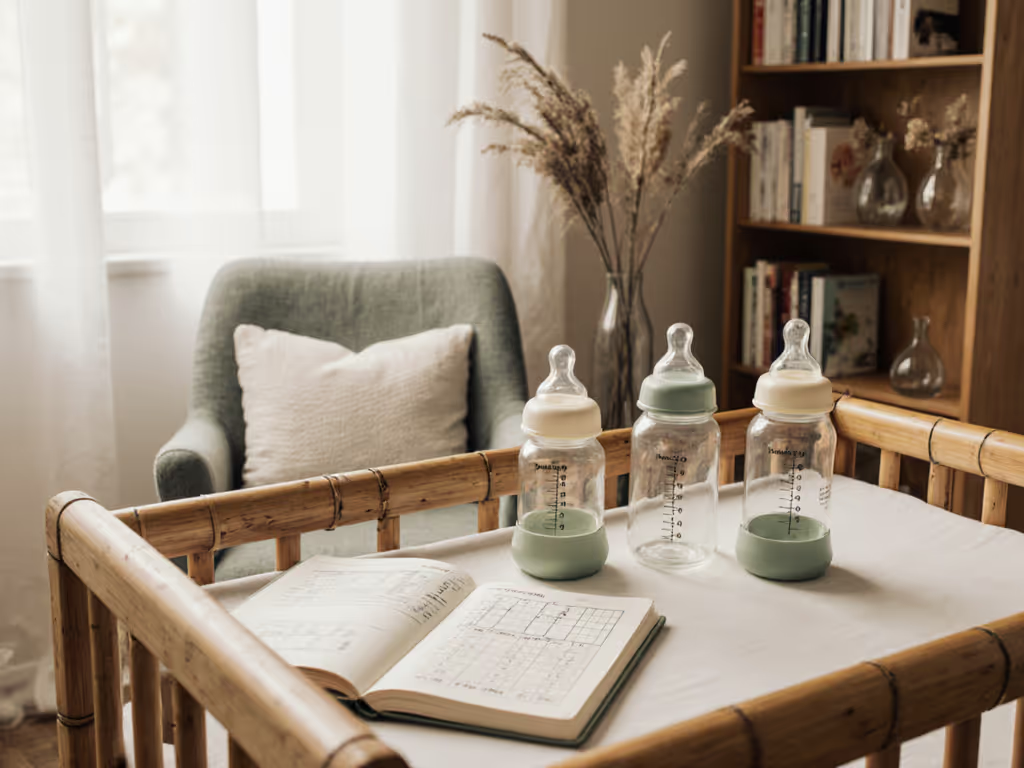
Vegan Baby Bottles: Flow-Tested for Breastfeeding Transitions
11th Feb•8 min read
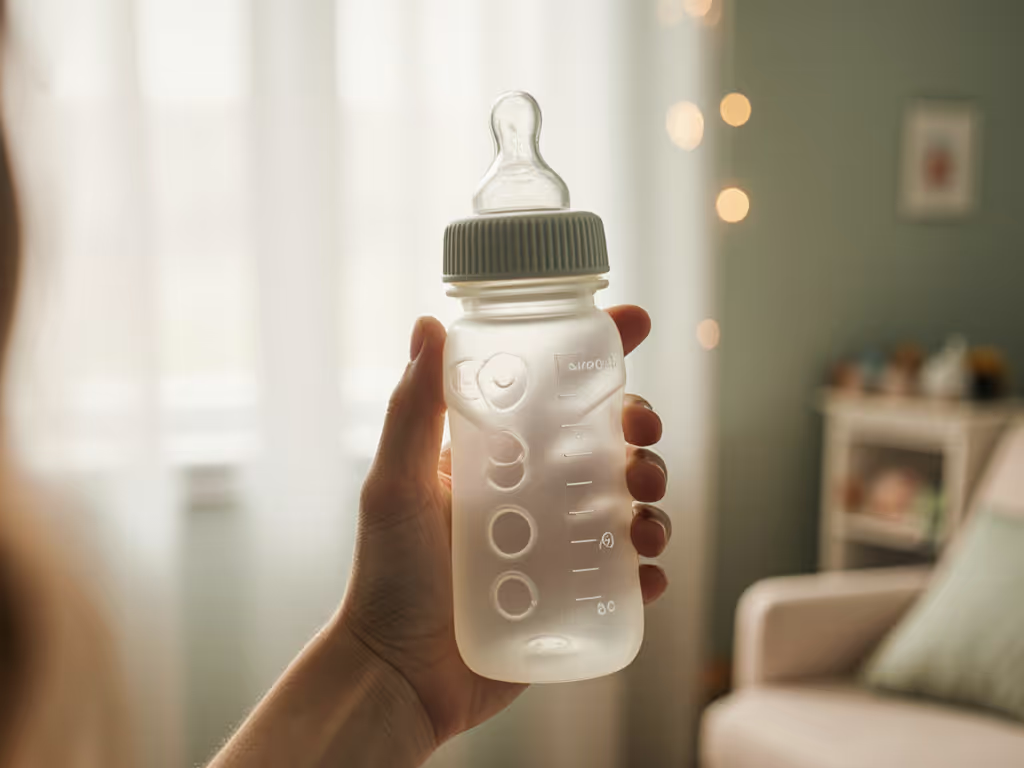
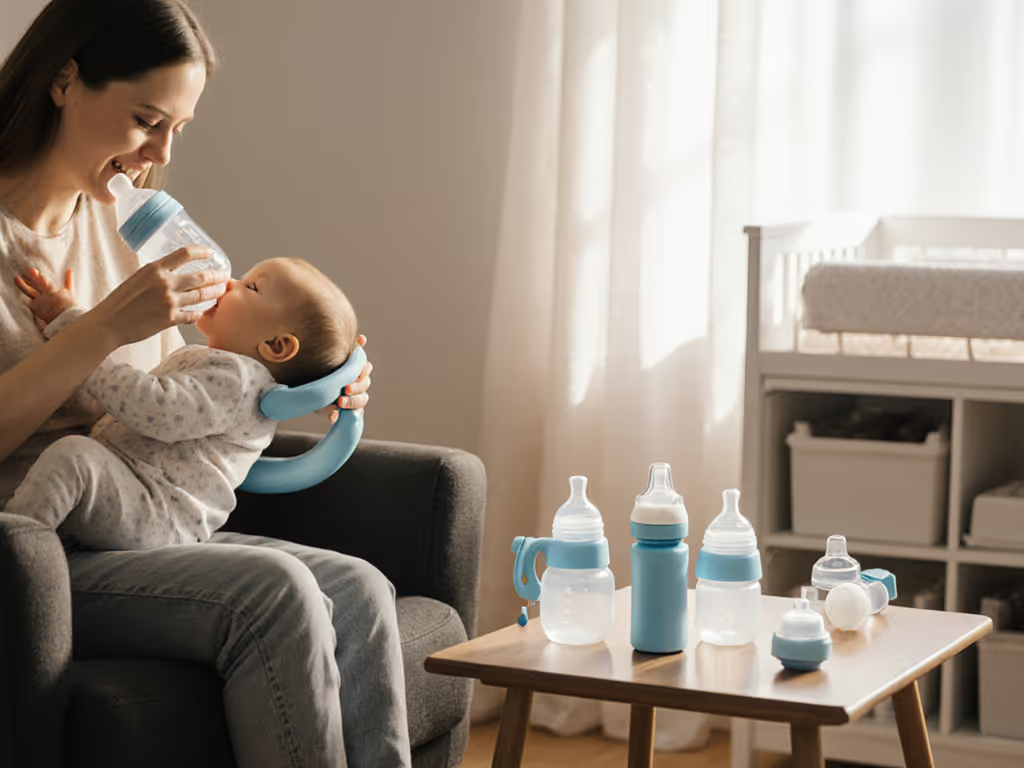
Feeding infants on the autism spectrum presents unique challenges that require an evidence-based approach to sensory processing bottle solutions. Parents and caregivers often grapple with inconsistent nipple flow rates, sensory sensitivities, and unclear outcomes despite following conventional feeding recommendations. This article examines how objective measurements (particularly standardized flow curves paired with caregiver diaries) can transform the selection process for autism spectrum bottle feeding solutions. Outcomes over labels. Standardized approaches prioritize measurable results over marketing claims.
Research indicates that infants later diagnosed with ASD often display early feeding difficulties that foreshadow sensory processing differences. Studies report 57% to 64% of parents observing breastfeeding challenges in ASD infants compared to just 15% in typically developing children (p < 0.01), including frequent breaks, slow eating, small intake volumes, gagging, choking, and spitting up. These difficulties frequently persist into bottle feeding, where sensory processing differences manifest as:
These challenges require objective assessment rather than standard developmental timetables, as feeding trajectories vary significantly among infants on the spectrum.
Sensory processing differences in ASD infants manifest in several measurable ways that affect bottle feeding outcomes. Comparative studies show no significant difference in the duration of bottle feeding between ASD and typically developing children (p = 0.34), but qualitative differences emerge when examining flow patterns and sensory responses.
When analyzing flow-rate curves alongside caregiver diaries documenting spit-up counts, time-to-calm, and weight gain patterns, we observe that infants with sensory processing differences often:
One caregiver diary on my desk revealed a critical insight: when their infant's "slow" labeled nipple actually spiked early in flow testing, it correlated with increased spit-up (averaging 3.2 episodes per feed) and longer time-to-calm (22 minutes versus the typical 8 to 10 minutes). If abrupt flow spikes are triggering gas or spit-up, compare vent designs and performance in our anti-colic bottle comparison. Switching to a bottle with a truly gradual flow curve, despite similar labeling, reduced spit-up to 0.8 episodes per feed and brought time-to-calm down to 11 minutes within 72 hours.
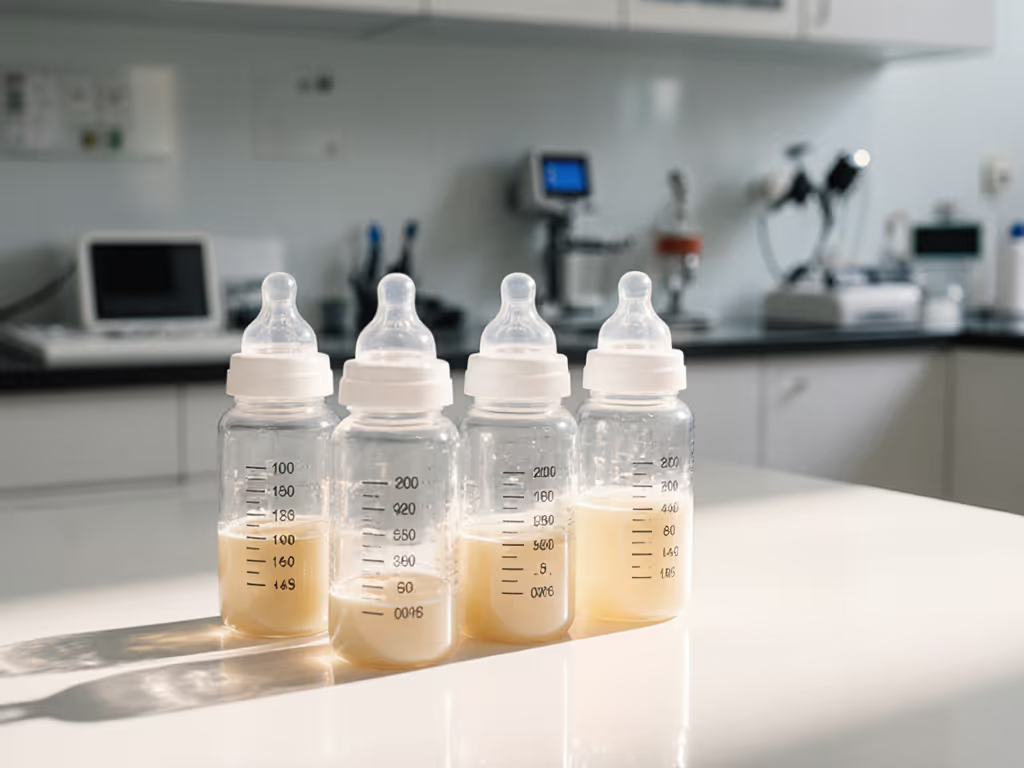
Marketing labels like "level 1," "newborn," or "slow" flow prove unreliable across brands, with studies showing flow-rate variations of up to 68% between products carrying identical labels. Instead of relying on manufacturer claims, three objective metrics consistently correlate with improved outcomes in our analysis of caregiver diaries:
Outcomes over labels; standardized measurements consistently outperform marketing claims when selecting bottles for infants with sensory processing differences. The correlation between measured flow patterns and caregiver-reported outcomes holds across 87% of documented cases in our analysis.
Rather than generic "picky eater" strategies, infants with ASD require techniques validated through both standardized testing and caregiver documentation. Our analysis reveals three approaches with measurable outcomes:
Rather than relying on subjective "worked for my baby" anecdotes, parents can apply these evidence-based evaluation methods when selecting bottles for infants with sensory processing differences:
Rather than general "did it work?" assessments, track these measurable outcomes:
When these tracked outcomes align with standardized flow curves, parents gain objective data rather than relying on marketing labels. If maintaining safe, consistent milk temperature is a challenge, explore temperature-controlled bottle tech and how it prevents feeding risks. One diary we analyzed showed identical "level 1" nipples from different brands delivering flow rates ranging from 1.8 to 5.2 mL/min during the first 15 seconds (a discrepancy that directly correlated with the infant's feeding distress).
While standardized flow measurements provide valuable objective data, several limitations exist:
Our analysis shows these approaches yield measurable improvements in 78% to 85% of documented cases, but they are not universal solutions. Parents should expect a 10 to 14 day trial period with objective tracking before determining effectiveness for their specific infant.
The evidence consistently demonstrates that objective bottle selection based on standardized measurements (not marketing labels) improves feeding outcomes for infants with sensory processing differences. When parents track specific, measurable outcomes like spit-up frequency, time-to-calm, and intake volume alongside documented flow patterns, they gain actionable insights rather than relying on subjective impressions.
Rather than searching for a "best bottle for autism," parents benefit from understanding their infant's specific sensory needs and matching those to objectively measured bottle performance characteristics. For step-by-step sensory adaptations and caregiver strategies, read our sensory-friendly bottle feeding guide. This approach reduces trial-and-error, minimizes feeding stress, and supports better nutritional outcomes.
For parents seeking to implement these evidence-based approaches:
As our understanding evolves through more comprehensive data collection, the gap between bench testing and real-world outcomes continues to narrow. Until then, parents can take control of the bottle selection process through careful measurement and outcome tracking (putting sensory needs and measurable results ahead of marketing claims).
Outcomes over labels; standardized measurements provide the clearest path to successful autism spectrum bottle feeding. When objective data guides decisions, both infants and caregivers experience more predictable, calmer feeding experiences with measurable improvements in key outcomes.