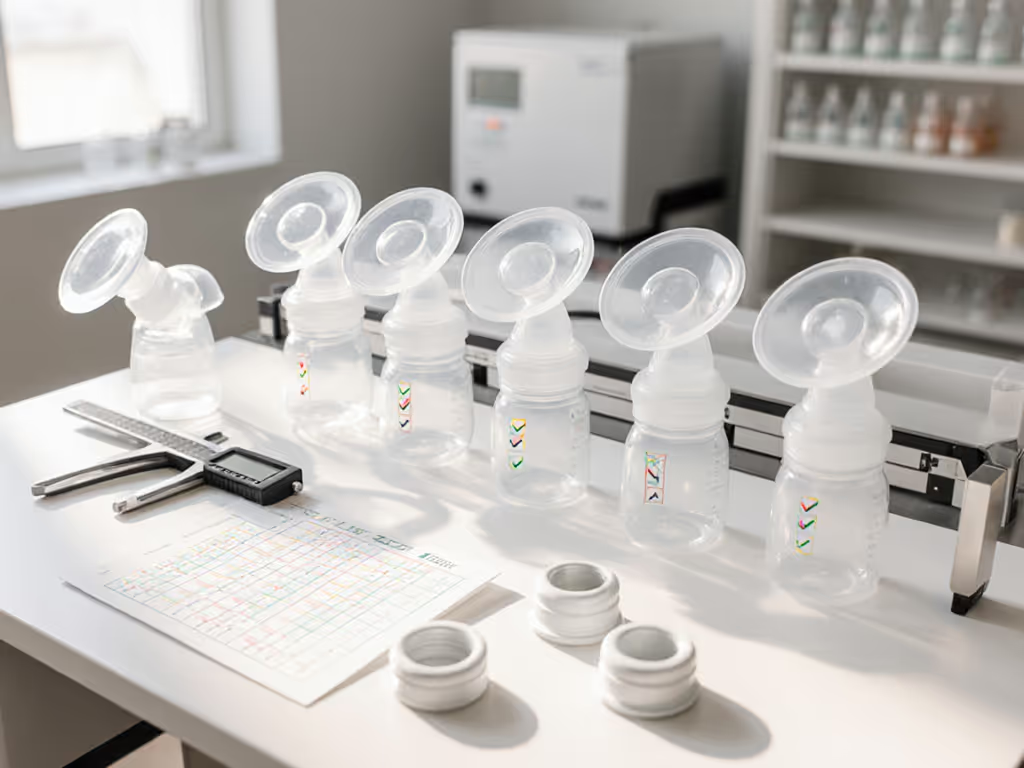
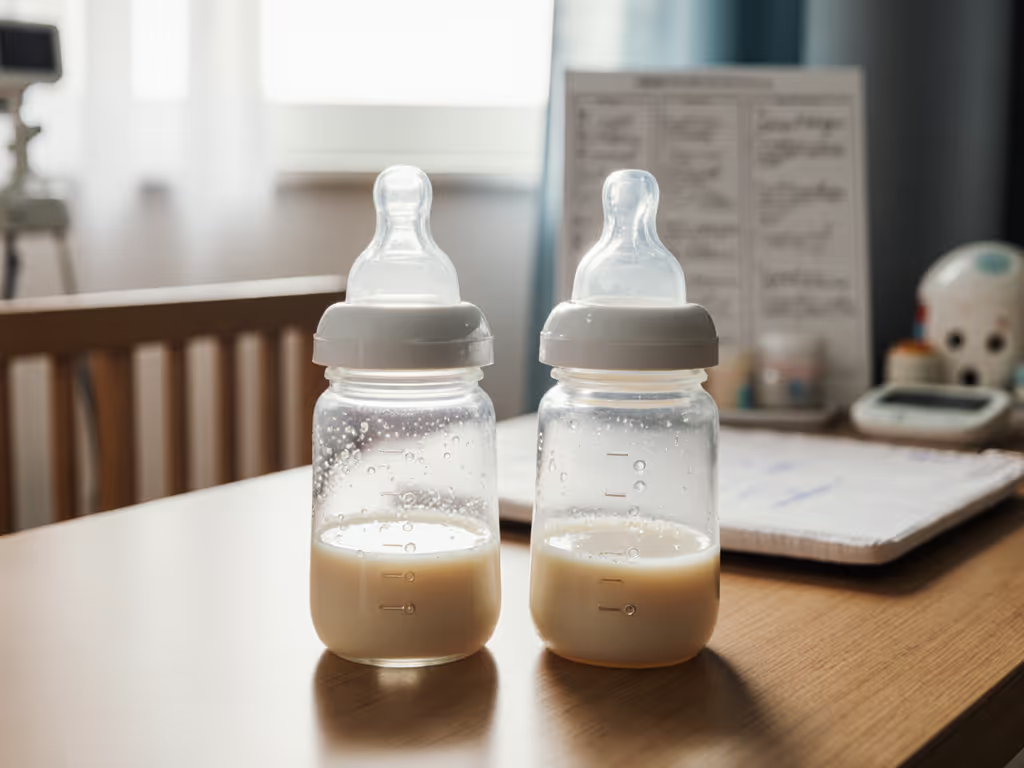
3-in-1 convertible bottle systems promise growth without gear bloat (a bottle, food jar, and cup all in one frame). But does unified hardware deliver unified flow consistency? Testing across stages reveals that bottle-to-cup transition comparison depends less on marketing tiers than on standardized flow measurement and real-world weight or spit-up tracking. This guide cuts through the promises to show what actually sustains feeding outcomes as babies mature.
What Makes a 3-in-1 System Worth Testing?
Parents often inherit a philosophy without questioning it: "We'll buy one bottle now, add a cup later." That sounds efficient until you realize flow-rate labeling ("slow," "newborn," "level 1") is inconsistent across brands, and sometimes within the same brand across generations. A so-called slow nipple on one system may deliver milk faster than a medium nipple on another.
When a caregiver diary landed on my desk years ago, it showed weight logs, spit-up counts, and timestamps. Overlaying that data with flow-rate curves from bench testing revealed the culprit: early-stage slow nipples spiked flow rates mid-feed, spiking the baby's intake and burping. Switching to a system with genuinely flat, slow flow brought steadier weight gain and calmer burps. That matched diary entry to lab data convinced me: outcomes over labels. Standardized curves, not marketing claims, should guide recommendations.
3-in-1 systems are worth testing if the manufacturer publishes flow curves or submits to third-party bench testing, and if caregivers track intake and symptom changes. Otherwise, you're guessing.
How Do You Compare Flow Rate Consistency Across Stages?
Flow rates matter most in the first 6 months. A newborn's sucking strength is roughly 30-40 millimeters of mercury (mmHg) of intraoral pressure; by 4-6 months, that climbs to 60-80 mmHg. A bottle system worth the name should show measured flow at standard pressures (typically 60 and 100 mmHg) for each nipple stage.
Look for:
- Published milliliters-per-minute rates at defined pressures, not just labels like "slow" or "stage 2."
- Consistency session-to-session: Flow variance of more than ±10% across ten feeds suggests venting or seal problems.
- Air intake alongside milk flow: A slow-flow nipple that requires aggressive sucking or pulls excess air through a vent can trigger gas and reflux (outcomes that matter more than ml/min alone). If gas or spit-up is a recurring concern, compare venting designs in our anti-colic bottle comparison.
The best multi-stage bottle performance demonstrates that the base, nipple seat, and vent geometry remain stable as you swap nipple stages. If the nipple thread, seat angle, or vent diameter change, you're not upgrading stages, you're switching bottles. That means recleaning, re-assembly learning, and caregiver confusion, especially in daycare handoffs.
Systems where the same base accommodates stages 1, 2, and 3 nipples with identical vent placement and air pathway are rare. When they exist (and the maker publishes comparative flow curves), that's a data point worth recording in your own logs.
What Durability Factors Predict Long-Term Flow Consistency?
Flow rates drift. Ring seals wear, silicone nipples oxidize, and vents clog with residue. Get step-by-step care for tricky parts in our vented bottle cleaning guide. Tracking intake and spit-up over 8-12 weeks will reveal if your system's flow is drifting (a sign that replacement parts are needed sooner than expected).
Conversion system durability hinges on:
- Nipple material: Silicone resists oxidation better than rubber; medical-grade silicone (certified by ASTM D6504) holds its shape through dozens of sterilization cycles without micro-cracking.
- Ring seal integrity: The collar that seats the nipple should resist deformation. If it wears, milk leaks and air sneaks in, both undermine flow consistency and increase spit-up.
- Vent geometry: Hard plastic vents clog or crack. Integrated vent channels (part of the nipple itself) resist clogging better than separate air tubes.
- Material transitions: Where silicone meets plastic, thermal stress from sterilizing creates weak points. Systems with fewer material junctions last longer.
Durability is not aesthetic. It's measurable: feed-to-feed flow variance under 10% across 12 weeks indicates a system holding its mechanical tolerances. Variance creeping to 15-20% suggests it's time to replace the nipple, and a replacement kit should cost less than 20% of the original bottle investment.
Does a 3-in-1 System Save Money, or Does It Lock You Into One Ecosystem?
The promise is true if you commit to the system; the trap is real if you don't.
If your baby accepts the bottle and the flow remains stable across 12 weeks, a 3-in-1 framework saves money and kitchen clutter. One base, multiple nipple stages, and a cup attachment means fewer duplicate purchases. A typical scenario: buy the starter set (bottle + stage 1 nipple), add stage 2 nipples at 3 months, and a cup attachment at 6-8 months. Total cost stays below $60 if replacement parts are $8-12 each. For hands-on picks that truly grow from newborn to sippy without surprise costs, see our best multi-stage bottles.
The financial lock-in emerges if flow consistency fails early. If spit-up or intake tracking shows the system isn't matching your baby's sucking strength, you'll trial a second brand, now you've spent $40-80 on incompatible parts that clutter the cupboard.
To mitigate lock-in risk:
- Test acceptance in the first 1-2 weeks with a single bottle and one caregiver (e.g., you, during a calm midday feed). Track intake and behavior for 3-5 feeds.
- Buy a second compatible nipple stage immediately if acceptance is smooth. If the second stage's flow feels misaligned 2-3 weeks later, the system has a tolerance problem, consider pivoting before buying the cup attachment.
- Confirm daycare compatibility before committing. For checklists and labeling rules, see our daycare bottle protocols guide. Some settings require pre-assembled bottles and don't allow modular parts. A 3-in-1 system that breaks apart in a diaper bag is a 1-in-1 if daycare staff reassemble it incorrectly.
How Do You Track Intake and Outcomes in a Convertible System?
Volume markings on the bottle are rarely accurate beyond ±5-10 mL. For a 100 mL feed, that's a 5-10% margin of error, trivial for one feed, meaningful when summed across 8-12 feeds per day and tracked weekly.
Instead of relying on bottle markings:
- Weigh the baby weekly at home or clinic. Expect 15-30 grams of gain per day for the first 3 months; if you're tracking spit-up and want to correlate intake changes, weight trend matters more than a single feed volume.
- Log spit-up events: Date, time, estimated volume (teaspoon, tablespoon, ounce), and baby's behavior before and after. This is the caregiver diary data that reveals flow mismatches. If spit-up frequency increases when you switch to stage 2 nipples, flow may be too fast.
- Document transition markers: Date of each nipple stage change, any resistance or refusal, burping behavior, and sleep duration post-feed. A sudden drop in post-feed sleep or an increase in hiccups can signal flow or vent changes.
This is low-tech but high-signal. A simple shared spreadsheet (Google Sheets, shared note in a parenting app) that daycare staff or a nanny can update ensures everyone is reporting the same outcomes. When you compare flow curves to these logs, you're no longer claiming; you're observing.
What Gaps Remain in 3-in-1 Testing and Comparison?
Published research on 3-in-1 convertible systems is sparse. Most bench testing focuses on traditional bottles, not modular architectures. Gaps include:
- Long-term seal degradation: How does ring-seal tightness change over 50 sterilization cycles? Manufacturers rarely publish this.
- Air-intake consistency: How much total air does a baby ingest per feed at different nipple stages, and does venting redesign reduce it? Caregiver logs hint at the answer (gas, reflux trends), but clinical data is scarce.
- Caregiver assembly error: Daycare staff may assemble the bottle incorrectly (nipple reversed, vent unplugged, ring seal misseated). How often does this happen, and what's the cost to feed outcomes? Unknown.
- Nipple preference and latch: Does switching from a traditional bottle to a modular 3-in-1 system affect baby's latch mechanics? Anecdotal reports suggest some babies reject the flow or mouthfeel, but standardized comparisons are rare.
Until these gaps close, your household data (weight, spit-up, behavior) becomes the most reliable test. Outcomes over labels. Compare what you measure, not what marketing promises.
When Should You Pivot Away From a 3-in-1 System?
Replace the system if:
- Acceptance stalls beyond 2 weeks. Bottle refusal that persists despite paced feeding technique and multiple feeding sessions suggests a flow or latch mismatch, not user error.
- Flow consistency drifts by 15%+ over 4-8 weeks. If your intake logs show increasing variance or daycare reports leaks that didn't exist initially, the seal or nipple is degrading faster than expected.
- Spit-up escalates after a stage transition and persists for 3+ days. This often signals flow is too fast for your baby's current sucking strength.
- Daycare rejects the system. If your childcare setting won't use modular bottles or requires pre-assembled, simple designs, a 3-in-1's portability advantage vanishes. Pivot to what daycare accepts.
- Replacement parts become unavailable. If your system is discontinued or stock dries up, you'll need a backup ecosystem anyway. Buy ahead or switch now to a system with stable, local supply.
Pivoting early (by week 3 or 4, before sunk-cost guilt takes hold) saves time and reduces the mental load. One successful system beats two mediocre ones.
Key Takeaways: Evaluation Checklist
When comparing 3-in-1 convertible bottle systems, use this data-driven framework:
- Demand published flow curves at standard pressures (60 and 100 mmHg) for each nipple stage. If the maker doesn't publish them, assume consistency is unknown.
- Check component durability specs: Medical-grade silicone nipples, sealed ring construction, and integrated vent channels outlast cheaper alternatives over 12+ weeks.
- Track intake, weight, and spit-up from day one. A simple shared log is your evidence base; it reveals what marketing and labels cannot.
- Test acceptance within 1-2 weeks and pivot early if resistance emerges. Sunk-cost avoidance beats multibottle clutter.
- Confirm daycare compatibility before buying beyond the starter set. A modular system has no advantage if caregivers won't or can't assemble it correctly.
- Monitor flow consistency every 4 weeks by watching for leaks, intake variance, and spit-up trends. Replace nipples if variance exceeds 10-15%.
3-in-1 systems offer genuine convenience, if the engineering is sound and outcomes validate the choice. Outcomes over labels; standardized testing data, paired with your own careful logs, is the North Star. Start lean, measure rigorously, and scale only when evidence supports it.