Pump Bottle Compatibility: Adapter Testing
2nd May•10 min read
You've probably stared at your changing table with bottles from three different brands (each labeled "slow flow") wondering why one makes your baby gag while another requires exhausting sucking. That's why understanding international bottle flow rates matters more than ever. After testing dozens of nipples across continents, I've found what the packaging won't tell you: global nipple comparison reveals staggering inconsistencies that directly impact your baby's feeding comfort. Start with what you already own. This isn't just frugal advice, it is the foundation of solving feeding struggles without emptying your wallet.
Imagine two bottles side by side: both marked "Newborn Flow (0+ months, 1 hole)" from the same brand. You'd expect similar performance, right? Wrong. According to peer-reviewed studies measuring actual flow rates, these nearly identical Philips Avent nipples deliver milk at dramatically different speeds: 8.19 mL/min for the Classic versus 1.68 mL/min for the Natural. That's a fivefold difference hidden behind identical labeling. This isn't an anomaly, it is the global standard.
What your baby actually experiences depends far more on the nipple's internal geometry than the "slow/medium/fast" label plastered on the box.
The numbers are staggering:
These are not minor variations, they are game changers for your baby's feeding experience. Flow rates labeled "Newborn" span from 0.86 mL/min (Dr. Brown's UltraPreemie) to 15.12 mL/min (NUK), creating a feeding landscape where parents essentially gamble with each purchase. For a deeper breakdown of flow categories and when to transition, see our lab-tested flow rate guide.
European bottles like MAM and NUK prioritize wide, breast-mimicking bases with flexible nipples, while many Asian brands (Pigeon, Comotomo) focus on ultra slow flow and unique valve systems. American brands often sit somewhere in between. None follow standardized flow testing protocols, making cross continent comparisons nearly impossible for exhausted parents.
Let's break down what lab testing reveals:
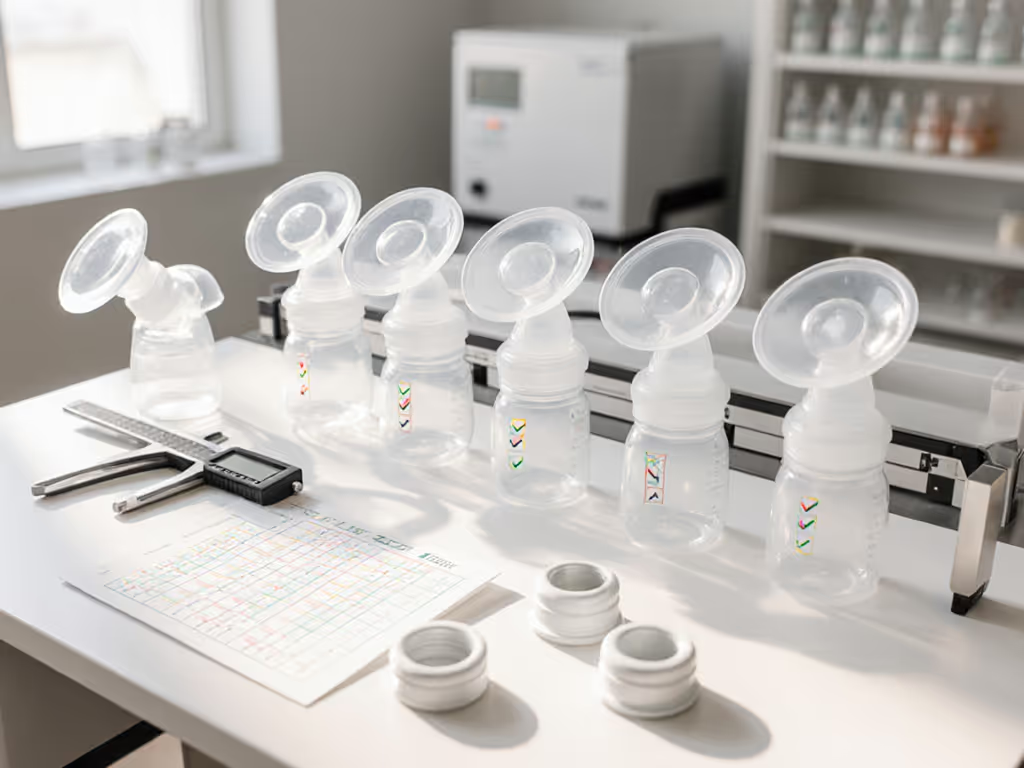
Pigeon's "Newborn" nipple, beloved in Asian markets, tested at just 3.2 mL/min, slower than most Western "Newborn" options. But here's what matters: the venting system creates inconsistent flow during feeds, requiring precise bottle angle to prevent vacuum lock. Pigeon PP2 (0m+) threads: 48 mm diameter, 0.8 mm pitch are compatible with Medela pump adapters when using a Dr. Brown's ring (PP213001), but not directly with Philips Avent. If you're considering Pigeon's triangular nipple system, read our Pigeon Peristaltic review for fit tips and flow behavior.
MAM markets a 94% acceptance rate, but independent testing shows their "Extra Slow Flow" nipple actually delivers 4.1 mL/min, faster than many true newborn options. The real win? MAM's vented base creates consistent flow without collapse, reducing air intake. For a broader look at vented designs, check our anti-colic bottle comparison to see which systems actually reduce gas. However, their threaded design (48.5 mm diameter) requires an adapter ring (MAM #50002) to fit standard pump flanges, adding complexity for pumping parents.
NUK's "Slow Flow" Orthodontic nipple tested at 15.12 mL/min, more comparable to a "Level 2" than true newborn flow. The curved design helps some babies with tongue tie, but it can cause leakage with improper ring tightening (MAM rings can fail to seal properly). NUK's unique threading (50 mm diameter, requires NUK #1023 ring) means zero pump compatibility without third party adapters.
Let's calculate what bottle mismatches actually cost you:
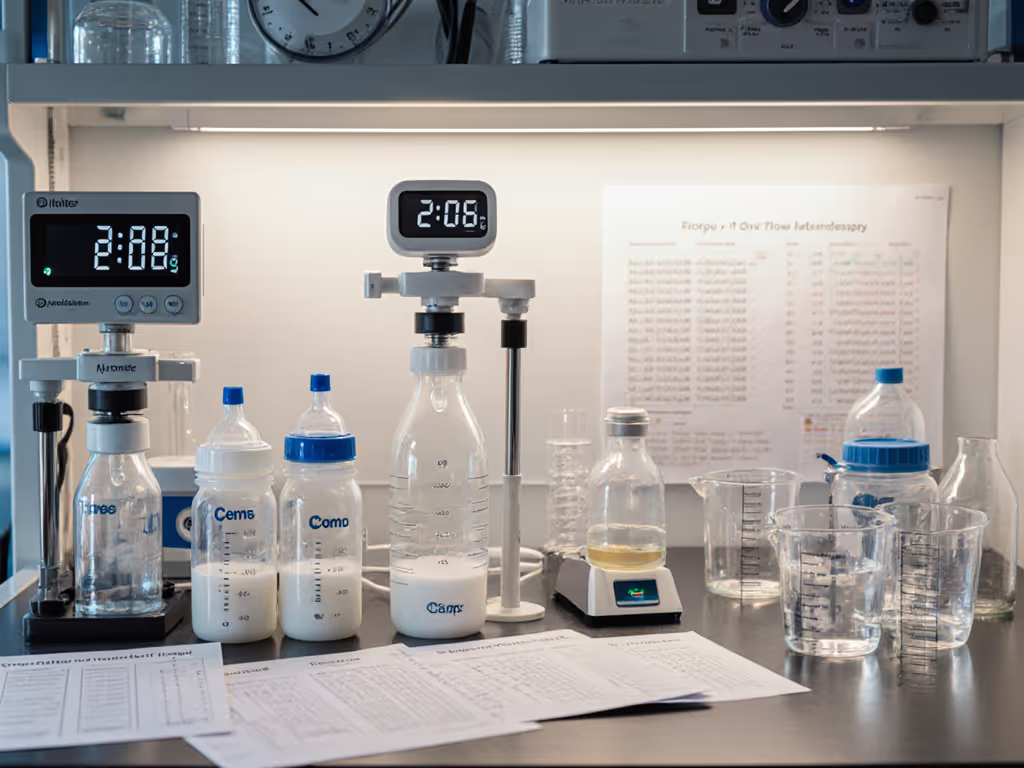
That daycare pickup moment when you're down to your last clean bottle? I've been there. If daycare is part of your routine, our daycare bottle protocols cover labeling, storage, and safe handoffs. Instead of grabbing another system, I matched threads and measured flow with water and a stopwatch. That $0 fix stopped leaks and saved our week's feeding budget. Reuse first has guided me ever since.
Grab every nipple you have. Forget the labels, test actual flow rates with this method:
Track results in this simple framework:
| Nipple Brand | Labeled Flow | Measured Flow (mL/min) | Baby's Reaction |
|---|---|---|---|
| Avent Natural | Newborn | 1.7 | Took 22 min/feed |
| Dr. Brown's Y-cut | 9+ mos | 85.3 | Coughing/spitting |
Most feeding struggles come from mismatched parts, not "bad" bottles. These verified fits prevent costly replacements: For pump-to-bottle setups by brand, use our bottle-pump compatibility guide.
Before buying anything new, calculate the real cost of your current system:
Cost per feed = (Bottle cost ÷ Expected lifespan) + (Nipple cost ÷ 30 days)

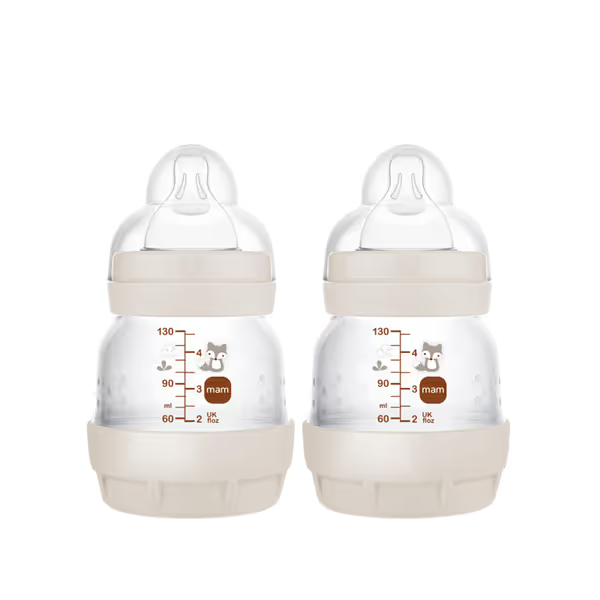
Example: MAM 2-pack ($14.99) ÷ 6 months = $0.08/feed
Plus nipple replacement ($4.50 ÷ 30 days) = $0.15/feed
Total: $0.23/feed
Compare this to trial-and-error purchases:
7 bottles × $18 ÷ 140 feeds = $0.90/feed
The difference? $0.67/feed × 140 feeds = $93.80 saved by reusing properly.
Not all additions are wasteful. Flag these as genuine upgrades:
✅ Must-Buy (if solving specific problem):
❌ Nice-to-Have (skip unless you've exhausted free fixes):
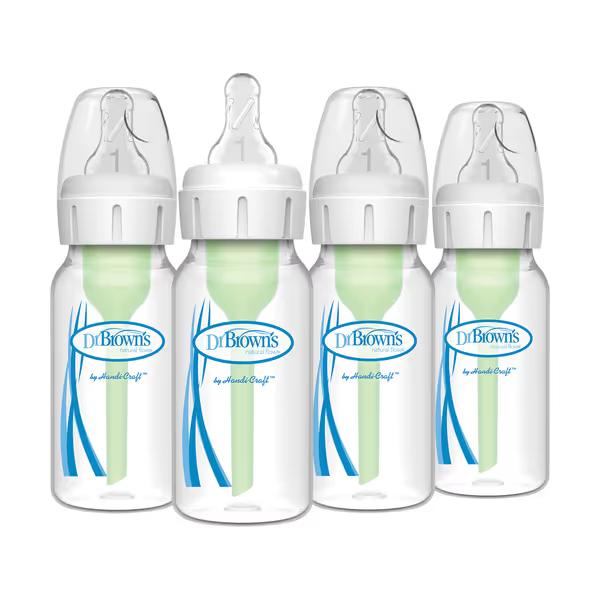
Your baby doesn't care about "Level 1" or "Newborn Flow", they care about consistent, comfortable feeding. The lab data proves it: global nipple flow rates vary wildly regardless of marketing labels. What matters is matching your baby's actual sucking strength to verified flow rates, not brand promises.
Your actionable next step: Tonight, test one nipple from your collection using the water stopwatch method. Record the mL/min. Compare it to the chart below:
| Flow Rate (mL/min) | Best For |
|---|---|
| 0.8–3.0 | Preemies, reflux babies |
| 3.1–7.0 | True newborns (0–6 weeks) |
| 7.1–12.0 | 2–4 month olds |
| 12.1+ | 4+ months or strong feeders |
If your tested flow aligns with your baby's age category but feeding remains problematic, check ring tightness before blaming the nipple. Nine times out of ten, it is a simple seal issue, not a "bad" bottle. This single adjustment has saved countless parents from unnecessary purchases.
Remember: The most expensive system isn't always the best solution. I've watched parents spend $200 on specialty bottles when a $2 ring adapter solved their leaks. Calculate your cost per feed, document what works, and reuse what you own. True feeding confidence comes not from accumulating gear, but from understanding what you already have.