
Pump Bottle Compatibility: Adapter Testing
2nd May•10 min read
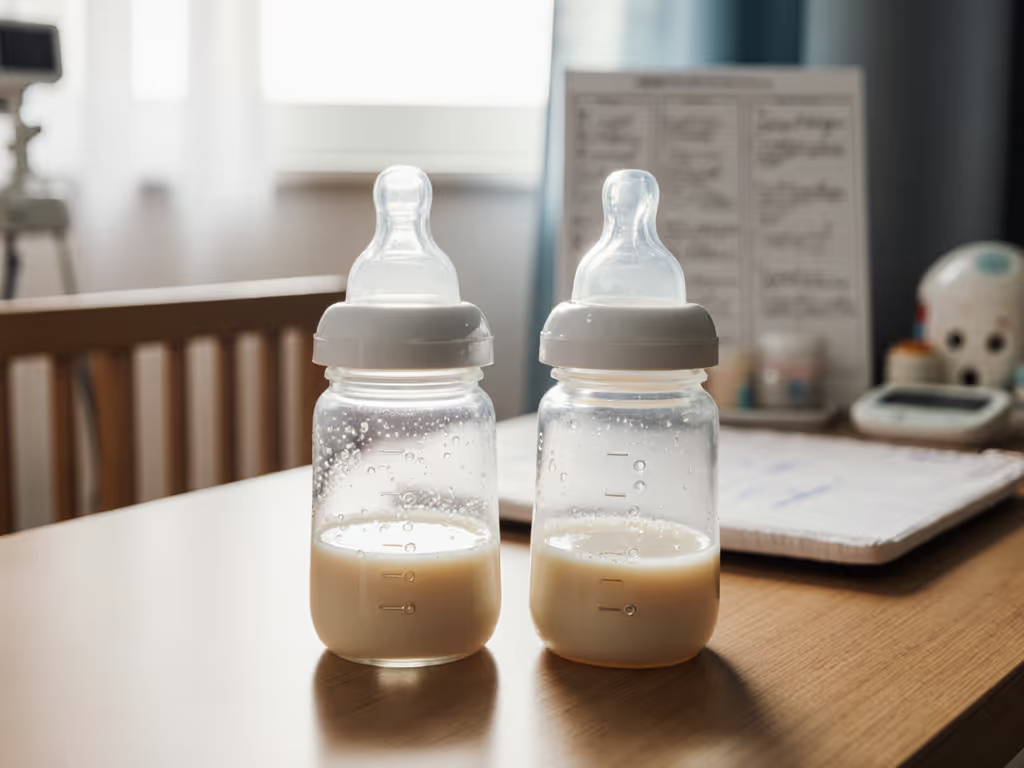
Narrow-neck vs wide-neck bottles represent two distinct approaches to bottle design, yet the choice between them for preterm infants hinges less on marketing labels and more on how each design performs under real-world feeding conditions. For parents of preemies transitioning from tube feeds or those managing combined breast and bottle feeding in a NICU or home setting, the mechanical differences between these bottle types carry measurable implications for intake consistency, weight gain trajectory, and feeding stability.
Standard or narrow-neck bottles feature a traditional, slim opening that creates a deeper latch point, while wide-neck bottles offer a broader, sloped nipple designed to approximate the shape of the breast. However, the visual distinction masks a more critical distinction: how these designs affect the flow curve (the rate at which milk transfers from bottle to baby across the entire feeding session).
In a typical scenario observed across multiple caregiver diaries, the nipple length, nipple base diameter, and the rigidity of the bottle collar all influence how a baby's mouth seals around the teat and, consequently, how consistently milk flows. For a quick refresher on bottle anatomy and how each part affects latch and flow, see our parent guide. A narrower teat often requires the baby's lips to close more tightly, while a wider base may allow a more open gape, but neither guarantees a superior feeding outcome on its own. What matters is whether the actual flow rate aligns with the baby's sucking strength and whether that rate remains stable throughout the feed.
One of the most overlooked variables in bottle selection is flow rate validation. Get the data on lab-tested nipple flow rates and how to choose the right level. Bottles labeled "newborn," "slow," or "level 1" often vary significantly across manufacturers, and even within a single brand line, production variance can shift the actual milliliters-per-minute delivered to the baby. For preemies, who typically have a weaker suck and lower oral-motor stamina, this inconsistency carries real weight.
When flow rates are measured under standardized lab conditions (gravity-fed at fixed heights, consistent pressure), narrow-neck bottles often deliver a slightly more controlled, narrower flow window. This is partly because the smaller nipple orifice and the deeper, more constrained latch geometry naturally slow milk transfer. Wide-neck bottles, with their broader nipple base, may permit faster milk delivery if the baby can maintain a secure seal, but the variability between individual bottles increases.
The practical implication: a preemie fed from a bottle labeled "slow" on a narrow-neck system may experience a more predictable intake curve session to session. However, if the baby's oral mechanics favor a wider gape (as sometimes occurs in preemies with lower muscle tone), the same narrow nipple may cause the baby to fatigue, slip, or create a poor seal that introduces excessive air.
Narrow-neck bottles hold a significant position in NICU and pediatric feeding practice. Dr. Brown's narrow bottles, for example, rank as the #1 pediatrician-recommended bottle in the United States and are routinely used in NICUs for babies with feeding difficulties. This clinical endorsement reflects not marketing but repeated observation of outcomes: these bottles often result in steadier intake logs, more consistent weight gain curves, and fewer episodes of choking or coughing in feed-vulnerable populations. If you’re comparing options, our roundup of NICU-recommended preemie bottles explains which systems control flow best for tiny feeders.
Predictable flow under standard conditions: The narrower nipple orifice and teat geometry tend to produce more consistent flow rates across multiple uses of the same bottle, supporting accurate volume tracking in caregiver logs.
Deeper latch geometry: The design encourages the baby's lips to engage further onto the teat base, reducing air leakage and supporting stronger seal pressure, important for infants with reduced oral strength.
Compatibility with standard accessories: Narrow-neck bottles fit most bottle warmers, sterilizers, and carriers on the market, reducing the friction of care coordination across multiple caregivers (parents, grandparents, daycare staff).
Easier measurement accuracy: The slimmer profile and consistent internal diameter often correlate with more reliable volume markings, reducing the uncertainty in intake tracking, a critical data point for monitoring preemie weight gain and readiness for independent feeding.
Reduced portability: Narrower bottles are sometimes longer, making them bulkier in diaper bags or pump cases.
Cleaning difficulty: The narrow opening can pose challenges when using a bottle brush, increasing the time needed for thorough cleaning and the risk of residue or mold buildup in hard-to-reach areas.
Potential latch mismatch for some infants: Babies with very weak suck or oral hypotonia may struggle to engage the narrow teat, necessitating a switch to a wider design or a nipple with softer silicone to aid compression.
Wide-neck or wide-mouth bottles emerged partly as a response to breastfeeding-to-bottle transition challenges. By offering a wider, sloped nipple base, these bottles allow babies accustomed to a broad latch at the breast to apply a similar oral technique at the bottle. In a comprehensive study of 884 infants, 93% of babies accepted a leading wide-neck nipple design.
Broader latch engagement: Some preemies, particularly those with lower oral muscle tone or those transitioning from breastfeeding, may latch more securely on a wider base, improving seal integrity and reducing air intake.
Easier to clean and fill: The wider opening simplifies bottle assembly, filling, and cleaning, practical benefits that reduce caregiver burden, especially in multi-caregiver environments where execution consistency matters.
Compatibility with a wider range of nipples: Wide-neck systems often accommodate multiple nipple flow profiles, allowing caregivers to adjust flow within a single bottle family if the baby's feeding needs evolve (e.g., as a preemie gains strength).
Peristaltic or mimetic teat designs: Many wide-neck systems incorporate teats designed to mimic breast milk delivery, incorporating slower flow rates and softer silicone that may reduce the sensory shock of transitioning from breast to bottle.
Reduced fit with standard accessories: Some bottle warmers and sterilizers do not accommodate wide-neck bottles, creating logistical constraints in multi-caregiver settings or when equipment is shared across family members.
Variable flow control: The broader nipple base and the softer silicone often used in wide-neck teats can increase flow variability across bottles and users. A baby with a weak suck may receive a slower, steadier flow from one session and a faster flow from another, complicating intake tracking and making it harder to identify whether weight gain changes reflect feeding readiness or nipple inconsistency.
Complexity of multi-part systems: Many wide-neck bottles incorporate vented disks, straw systems, or air-release mechanisms to prevent colic. While these can reduce gas in some babies, they add assembly steps, create more surfaces to clean, and increase the risk of misassembly, particularly problematic when multiple caregivers are involved.
Preemies present a unique constraint: they typically lack the oral-motor strength and stamina of term infants, making them sensitive to flow rate mismatches. A flow that is too fast can overwhelm their sucking rhythm, leading to coughing, milk aspiration risk, or fatigue-driven early termination of feeds. A flow that is too slow can exhaust their muscles, causing the baby to give up before reaching adequate intake, a dynamic that shows up in caregiver logs as incomplete feeds and slower weight gain curves.
When flow-rate data from standardized bench testing is overlaid with caregiver feeding diaries (timestamps, volume offered, actual intake, weight trends, burp frequency, spit-up counts), a pattern often emerges: outcomes over labels; standardized, replicable protocols matter more than marketing claims about which design is inherently "better." A narrow-neck bottle with a verified slow-flow rate and consistent performance across uses may support steadier preemie weight gain than a wide-neck bottle with softer nipples but wider flow variance, or vice versa. The best choice is determined not by the bottle shape but by whether the baby's intake curve and weight trajectory align with medical targets.
Work with your pediatrician or NICU team to document your baby's current feeding behavior:
Given the clinical track record and flow consistency, narrow-neck bottles from established NICU suppliers (e.g., Dr. Brown's narrow-neck line) are a logical starting point for preemies. Introduce one bottle and observe over 3-5 feeds, documenting:
Before switching to wide-neck, determine whether the issue is flow rate (baby too slow), latch mechanics (baby not sealing), or another variable (room temperature, feeding position, caregiver technique). If the baby is fatiguing (taking 30+ minutes for small volumes), the narrow nipple may be too restrictive. If the baby is coughing or showing inconsistent intake, the flow may actually be too fast for oral-motor control, and a slower, verified nipple from the same narrow-neck family might resolve the issue.
If the baby consistently rejects narrow-neck bottles or if feeding times are excessive, trial a wide-neck bottle with a verified slow flow rate. Many wide-neck systems offer teats specifically sized for preemies or newborns. Again, document over 3-5 feeds and compare to the baseline data.
Once a bottle is accepted and supports healthy intake/weight gain, confirm that:
If the bottle passes these checks, invest in a small fleet (4-6 bottles) to establish consistency across all caregivers.
The strength of the narrow-neck vs. wide-neck comparison lies in caregiver diaries paired with growth data. Marketing claims and brand prestige are secondary. When weight-gain curves, spit-up frequency, and feed duration are tracked alongside bottle model and flow rate, patterns emerge that individual anecdotes cannot reveal. A baby who gains weight steadily, feeds in 15-20 minutes, and shows few post-feed symptoms is demonstrating that the chosen bottle, whether narrow or wide, is working. A baby with erratic weight gain, prolonged feeds, or excessive spit-up signals a mismatch that warrants adjustment, regardless of the bottle's label or design philosophy.
For preemies especially, this evidence-based approach reduces the trial-and-error cycle, which in turn reduces parental stress and the risk of introducing unsafe practices (e.g., forcing a baby to take a bottle that causes choking). It also supports communication across multiple caregivers: instead of "We like the wide bottles," the log reads, "This baby's feeds average 18 minutes, weight is tracking +15g/day, and spit-up is minimal on the [specific bottle model]. Stick with this option."
Many preemies are cared for by parents, grandparents, daycare staff, or nannies. If daycare is part of your plan, review our daycare bottle protocols for safe labeling, storage, and caregiver communication. Standardizing on a single bottle system reduces confusion and the risk of errors. Narrow-neck bottles have a logistical advantage here: they fit most standard warmers and sterilizers, and they are widely available at major retailers. Before buying equipment, check bottle warmer compatibility by bottle type to avoid fit surprises. Wide-neck bottles, while excellent for some babies, may not fit certain equipment, creating friction in coordinated care. Before committing to a wide-neck system for a preemie, verify that all caregiving environments (home, daycare, grandparent's house) can accommodate and safely use the bottle.
This comparative analysis is grounded in published clinical data and caregiver observations, but individual variation is substantial. A preemie's feeding response depends not only on bottle design but also on oral-motor maturity, positioning during feeds, caregiver technique (paced feeding, burp timing), and the baby's growth trajectory. Outcomes should always take precedence over design preferences. If a baby is thriving on a bottle that contradicts general recommendations, the evidence is in the baby's weight curve and feeding behavior, not in the bottle's label.
For further exploration, consult your pediatrician or a pediatric feeding specialist to review your baby's specific feeding history, establish individualized flow targets, and develop a transition plan as your preemie grows and oral-motor skills advance. Caregiver feedback logs and weekly weight checks are your most reliable tools for validating which bottle system is truly working for your baby.